Our Biology Letters paper received a nice write-up in Science:
https://www.science.org/content/article/too-hot-too-cold-birds-use-their-legs-thermostat
Our Biology Letters paper received a nice write-up in Science:
https://www.science.org/content/article/too-hot-too-cold-birds-use-their-legs-thermostat
Our paper using field thermal imaging in Australian birds has just been published in Biology Letters. We demonstrate that bird limbs exert greater control over peripheral heat loss than bird bills. Here is a link to the study.
Abstract
Endotherms use their appendages—such as legs, tails, ears and bills—for thermoregulation by controlling blood flow to near-surface blood vessels, conserving heat when it is cold, and dissipating heat in hot conditions. Larger appendages allow greater heat dissipation, and appendage sizes vary latitudinally according to Allen’s rule. However, little is known about the relative importance of different appendages for thermoregulation. We investigate physiological control of heat loss via bird bills and legs using infrared thermography of wild birds. Our results demonstrate that birds are less able to regulate heat loss via their bills than their legs. In cold conditions, birds lower their leg surface temperature to below that of their plumage surface, retaining heat at their core. In warm conditions, birds increase their leg surface temperature to above that of their plumage surface, expelling heat. By contrast, bill surface temperature remains approximately 2°C warmer than the plumage surface, indicating consistent heat loss under almost all conditions. Poorer physiological control of heat loss via bird bills likely entails stronger selection for shorter bills in cold climates. This could explain why bird bills show stronger latitudinal size clines than bird legs, with implications for predicting shape-shifting responses to climate change.
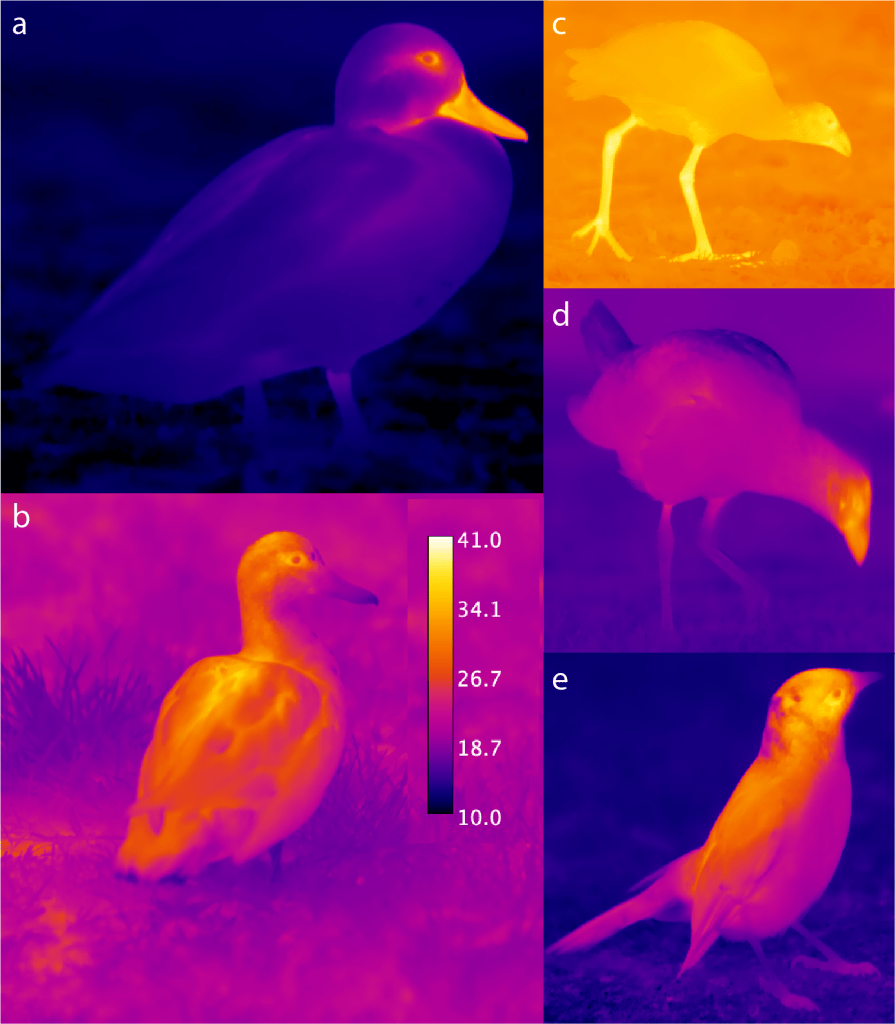
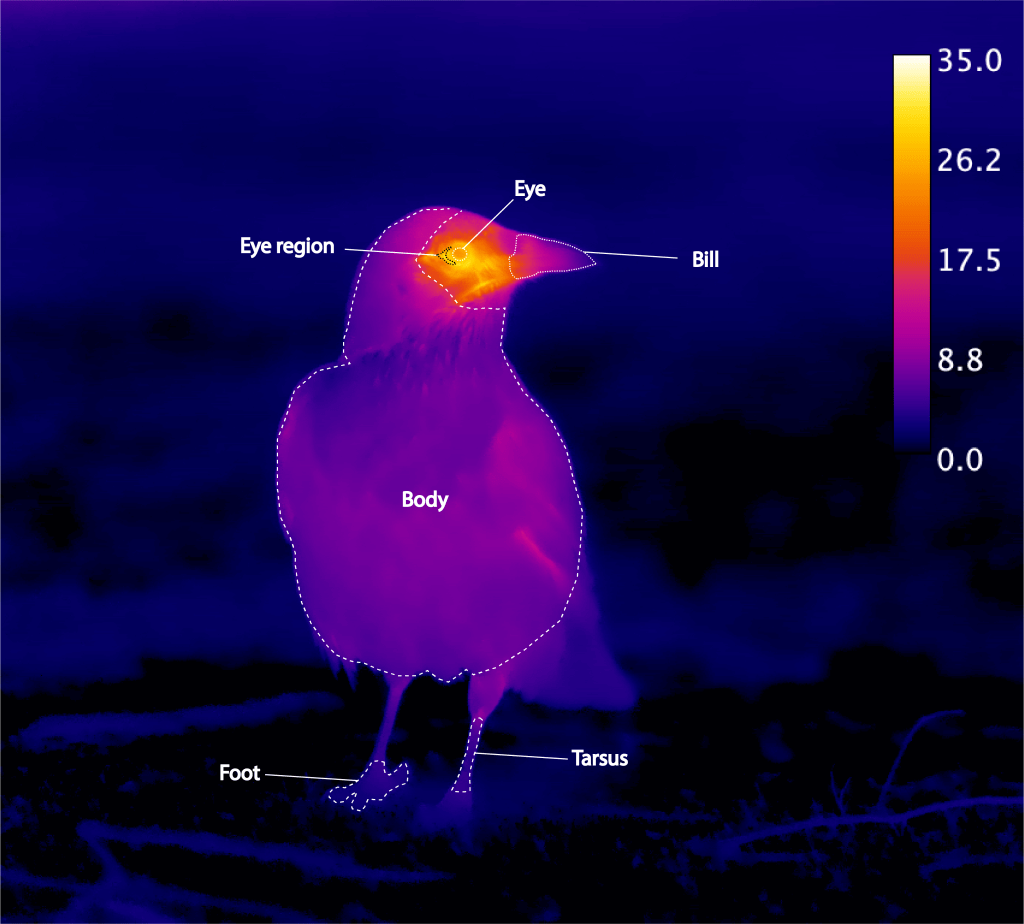

In the paper, we incorporate biophysical modelling of the two, well vascularised appendages to estimate the actual heat flux from the appendage (incorporating solar radiation, wind speed, relative humidity measurements) and then simplify this down to a simple metric of whether the appendage was losing heat or not.
Citation
McQueen, A, Barnaby, R, Symonds, MRE, and Tattersall, GJ. 2023. Birds are better at regulating heat loss through their legs than their bills: implications for body shape evolution in response to climate. Biology Letters. 19: 20230373. https://doi.org/10.1098/rsbl.2023.0373
Acknowledgements
The data from this study were collected by A McQueen and R Barnaby. We thank Scott Rolph, Robin Sinclair, Robert Moore, Mike Weston and Chris Purnell for help with fieldwork, private landowners for access to properties and reviewers for their helpful feedback. We acknowledge the Wurundjeri, Bunurong, and Wadawurrung People as Traditional Owners of the land on which fieldwork was carried out.
The following is a guest blog by Danilo Giacometti, MSc.
Background
By living underground or in burrows, fossorial animals benefit from protection against predators and climatic buffering. This seclusion, however, may lead to increased exposure to low O2 (hypoxia) and high CO2 (hypercarbia) levels in burrows. Hypoxia and hypercarbia are well known to impact respiration and energetics in both endotherms and ectotherms. If exposure to hypoxic and hypercarbic conditions persist over the long term (i.e., across generations), natural selection should favour organisms with a blunted sensitivity to gas exchange limitations. As such, fossoriality has long been associated with energy conservation. Most of the evidence in favour of fossorial species having low energetic requirements comes from work in mammals. By studying the metabolism of rodents, McNab (1966) suggested that fossorial species had convergently evolved low metabolic rates compared to non-fossorial ones. McNab’s logic was straightforward: given an energetic stressor (i.e., hypoxia and hypercarbia), natural selection favoured a physiological adaptation (i.e., low metabolic rates) that would minimise O2 depletion and CO2 buildup.
Almost 20 years later, this hypothesis was extended to explain metabolic adaptations in squamate reptiles by Andrews & Pough (1985). Although other researchers attempted to elucidate whether fossoriality had impacted the metabolism of vertebrate ectotherms (e.g., Kamel & Gatten, 1983; Ultsh & Anderson, 1988; Withers, 1981), most studies were limited by a small number of species used in comparisons, lack of phylogenetic control, and improper consideration of body mass effects over metabolism. Perhaps the most important consideration in this context comes from Wang & Abe (1994), who called attention to the fact that the metabolism of vertebrate ectotherms is intrinsically lower than that of endotherms. Thus, a further reduction in metabolism driven solely by fossoriality would be evolutionarily unlikely given the limited energetic benefit. In this sense, the impact of fossoriality on the metabolic rates of vertebrate ectotherms has remained unclear.
What did we do?
With this in mind, we addressed whether fossorial amphibians were selected for lowered metabolic rates compared to non-fossorial and aquatic ones in a phylogenetic framework. Building from a compilation of amphibian metabolic rates found in Chapter 12 of Feder & Burggren (1992), we collated a dataset with information on metabolic rates, test temperature, body mass, latitude, lifestyle, and phylogenetic relatedness of 185 species of amphibians (Fig. 1). Details on our methodology, inclusion criteria, and analyses can be found in our manuscript.

What did we find?
Thermal and body mass effects over metabolic rates
As expected, both test temperature and body mass explained differences in metabolism among species (Fig. 2). Metabolic rates increased with temperature; however, the thermal dependence of metabolism did not differ among lifestyles (Fig. 2A). Additionally, our results are in concert with the principle of metabolic scaling, as body mass was the primary determinant of metabolic rate variation after accounting for phylogenetic effects. In general, the larger the species, the higher its metabolic rate—once again, regardless of lifestyle (Fig. 2B). This finding fits in with the framework proposed by White et al. (2022), who argued that metabolic scaling is the outcome of optimised growth and reproduction. Considering that we found metabolism and body size to be inextricably correlated in amphibians, life history optimisation could be the mechanism behind our recovered pattern.

Unraveling the mysteries of fossoriality: potential roles of cutaneous breathing
Our results revealed that fossorial amphibians do not have lower metabolic rates compared to their non-fossorial and aquatic counterparts after controlling for body mass, temperature, and phylogenetic effects. We suggest that the low energetic requirements of amphibians, coupled with their efficient cutaneous and pulmonary respiration capabilities, may explain why fossoriality did not impinge on their metabolism. Preliminary work in caecilians showed that fossorial species can sustain energetic requirements solely through cutaneous breathing, suggesting increased reliance on skin breathing and enhanced control of bimodal breathing in this group (Smits & Flanagin, 1994). We suggest that further research into the blood respiratory properties and bimodal breathing capacities of fossorial versus non-fossorial amphibians should provide valuable insights into their energy-saving strategies.
Conclusion
Through a comprehensive comparative analysis, we bring to light the complex interplay of factors influencing the metabolism of amphibians. Our work emphasises the central role of body mass and temperature in determining metabolic rates and suggest the possibility that the unique respiratory physiology of amphibians may have contributed to offset the effects of fossoriality over energetics in this group. As research continues to unearth the mysteries of fossoriality, it promises to deepen our appreciation for the remarkable adaptations of these unique creatures living beneath the surface.
Our article will be freely available for eight weeks on initial publication. Read the full study here.
Citation
Giacometti, D and Tattersall, GJ. 2023. Putting the energetic‐savings hypothesis underground: fossoriality does not affect metabolic rates in amphibians. Evolutionary Ecology, In Press.
Acknowledgements
We thank Leonardo Servino for helping us obtain geographic coordinates for the species in our dataset. We also thank the two anonymous reviewers whose comments helped improve our manuscript. Research funding was provided by a Natural Sciences and Engineering Research Council of Canada Discovery Grant to GJT (RGPIN-2020-05089).
Long time in coming, but Phil Bartel’s Honours project was just accepted for publication in Behavioural Processes! We explored the influence of temperature on boldness, a personality trait, and more specifically the repeatability of these behaviours as a function of temperature.

Abstract to the study:
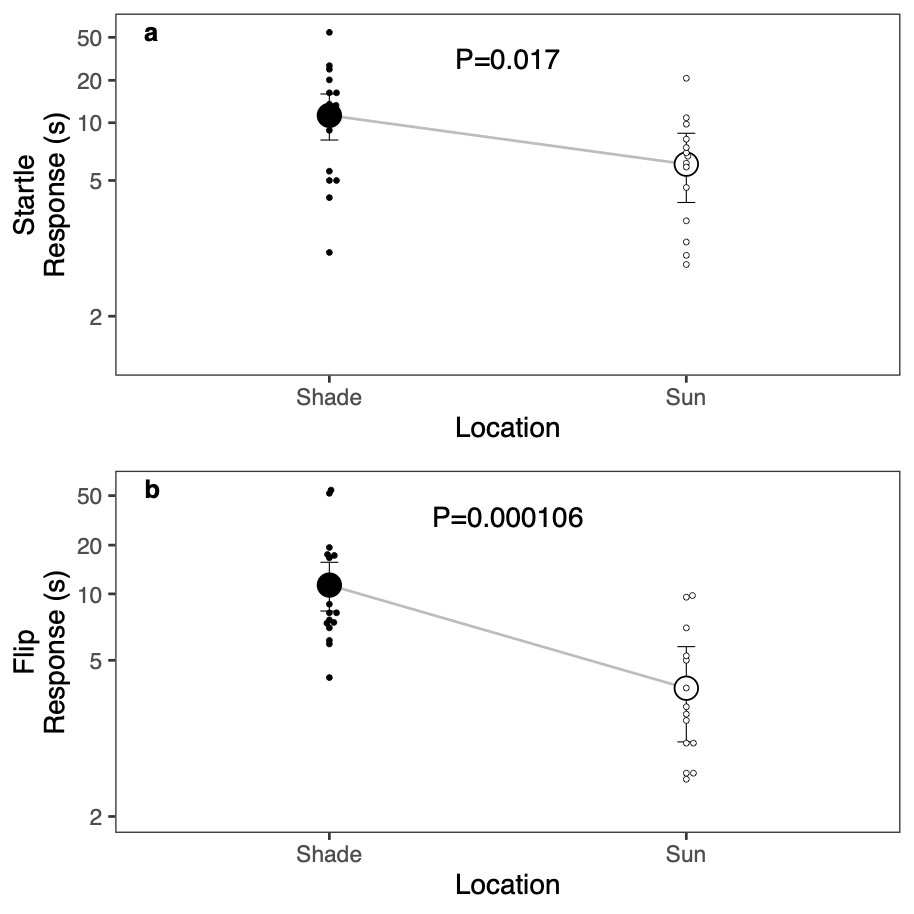
An animal’s boldness is generally considered to be influenced by genetic and developmental factors. However, abiotic factors such as temperature have profound effects on the physiology of ectothermic animals, and thus can influence the expression and measurement of this behavioural trait. We examined the relationship between temperature and behaviour in the Caribbean hermit crab (Coenobita clypeatus) using field and lab experiments. Crabs captured in the sun were bolder than crabs captured in the shade, even when measured at a common temperature, which led to bold crabs experiencing higher microhabitat temperatures. In laboratory housed conditions, crabs demonstrated highly repeatable boldness behaviours at all temperatures, and as temperature increased, the mean behavioural latencies decreased across all individuals. Bolder crabs do not seem to rely on an innately higher thermal preference, since there was no association between boldness behaviours and thermal preference in the laboratory. Instead, bolder crabs seem to exploit more open, riskier habitats than shyer crabs. Our results highlight the complex interplay between physiological and ecological factors influencing the behaviour of a widespread and ecologically important ectothermic animal.
For quick access to the paper (50 free clicks until September 2023):
https://authors.elsevier.com/a/1hR1o1LenMUgoK
Citation
Sakich, NB, Bartel, PC, Richards, MR, and Tattersall, GJ. 2023. Hot crabs with bold choices: temperature has little impact on behavioural repeatability in Caribbean hermit crabs. Behavioural Processes, 210: 104916. https://doi.org/10.1016/j.beproc.2023.104916
Acknowledgements
This project emerged from years of running Animal Behaviour labs with 3rd year undergraduates, teaching them about animal personalities, so we wish to the numerous cohorts of Animal Behaviour students who explored hermit crab behaviours with us, and inspired the project.
Dr. Katharine Yagi (Lab alumna and colleague) and Heather Yagi have written an educational storybook designed to teach children about the animals that could be in their backyard. See below:
Belatedly, congratulations to Melanie Denommé Stauder (newly married just this month as well) for being awarded an NSERC PGS-D for her PhD research in my lab. While my announcement is a little late, I was in the field when the results came in and unable to post online. Her PhD research on the “Effects of enclosure style on the behaviour and physiology of captive-bred bearded dragons (Pogona vitticeps)” is really starting to shape up with some exciting discoveries and she has brought a whole series of new insights to the lab. Every day is a positive learning experience for me!
Congratulations to Danilo Giacometti for proving that applying for scholarships/grants can pay off. Recently he found out he was the recipient of the Roger Conant award to support his salamander thermal biology research AND a travel award to attend the upcoming SSAR in Virginia AND he most recently found out that he has been invited to attend the RIBBiTR workshop in Costa Rica to learn techniques on research into conservation in amphibians.
I do have such great students!
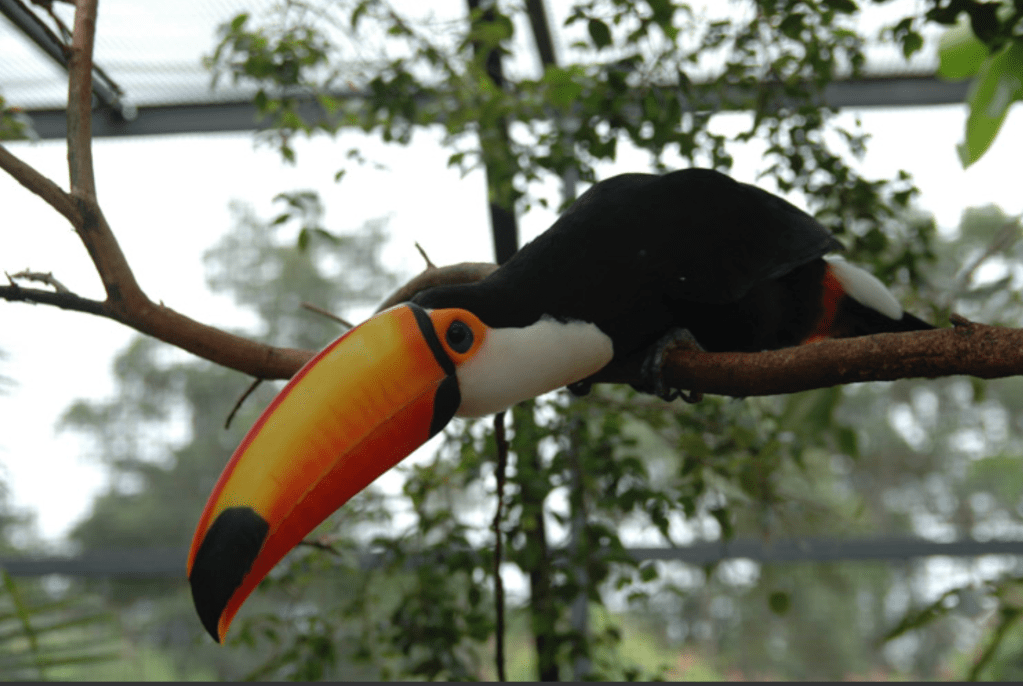
Our paper “Energetic costs of bill heat exchange demonstrate contributions to thermoregulation at high temperatures in toco toucans (Ramphastos toco)” was just accepted for publication in the Journal of Experimental Biology.
This research project was from Jussara Chaves’ MSc thesis done at UNESP, Rio Claro, Brasil with Dr. Denis Andrade.
We showed that insulating the bill does not alter the width of the thermal neutral zone, suggesting the toco toucan has the capacity to compensate for the sudden reduction in heat transfer from the bill, but at higher temperatures the normal role of the bill in assisting with heat dissipation becomes more clear. Birds with insulated bills show significantly higher metabolic costs of heat dissipation. Since the primary avenues for dissipating heat at high ambient temperatures are evaporative cooling, the compensatory mechanisms involve an increased reliance on panting and gular fluttering, which are metabolically costly. These results indicate that while heat dissipation through the bill does not contribute significantly to widening of the TNZ, it may well be critically important in assisting body temperature regulation at higher temperatures extending above the upper limit of the TNZ.
For a great summary of the article by Kathryn Knight, please see the Inside JEB article “Toucans’ ostentatious beaks do not expand their thermoneutral zone“.
Link
Access the paper from this Link (50 free clicks) or at the JEB website.
Citation
Chaves, J.N, Tattersall, GJ, and Andrade, DV. 2023. Energetic costs of bill heat exchange demonstrate contributions to thermoregulation at high temperatures in toco toucans (Ramphastos toco). Journal of Experimental Biology, 226, jeb245268. doi:10.1242/jeb.245268.
Acknowledgements
We wish to acknowledge Guilherme Gomes and Ariovaldo Pereira da Cruz-Neto for assistance with experiments and preliminary data analysis, and Luá T. Timpone and Adriana Fuga for assistance with animal care.
Our study on star-nosed moles was recently accepted in the Journal of Experimental Biology! In it we (myself and Kevin Campbell from University of Manitoba) present on a curious observation that the fleshy, tentacled nose of the star-nosed mole does not show much evidence for elevated blood flow, even when the moles encounter warm temperatures. Indeed, the highly mechanosensitive nasal rays of the star-nosed mole thermo-conform closely with ambient temperature thereby minimizing heat loss without apparent changes in sensory performance. Because this was a non-invasive study, we have to use thermo-conformation as a proxy for blood flow, and discover that they really don’t have high blood flow to the rays!
Abstract of the study
The star-nosed mole (Condylura cristata) is renowned for its densely innervated 22 appendage star-like rostrum (‘star’) specialised for tactile sensation. As a northerly distributed insectivorous mammal exploiting aquatic and terrestrial habitats, these vascularized nasal rays are regularly exposed to cold water and thermally conductive soil, leading us to ask whether the star surface temperature, a proxy for blood flow, conforms to the local ambient temperature to conserve body heat. Alternatively, given the exquisite sensory nature of the star, we posited that the uninsulated rays may be kept warm when foraging to maintain high mechanosensory function. To test these hypotheses, we remotely monitored surface temperatures in wild-caught star-nosed moles. While the tail acted as a thermal window exhibiting clear vasoconstriction/vasodilation, the star varied passively in surface temperature, with little evidence for thermoregulatory vasomotion. This thermoconforming response may have evolved to minimize conductive heat loss to the water or wet soils when foraging.
Gallery Images


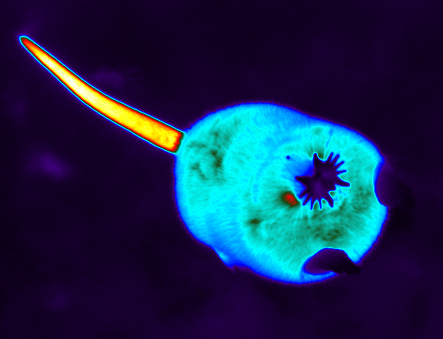
Note: WordPress may have mangled the videos. Looking into fixing….
Backstory
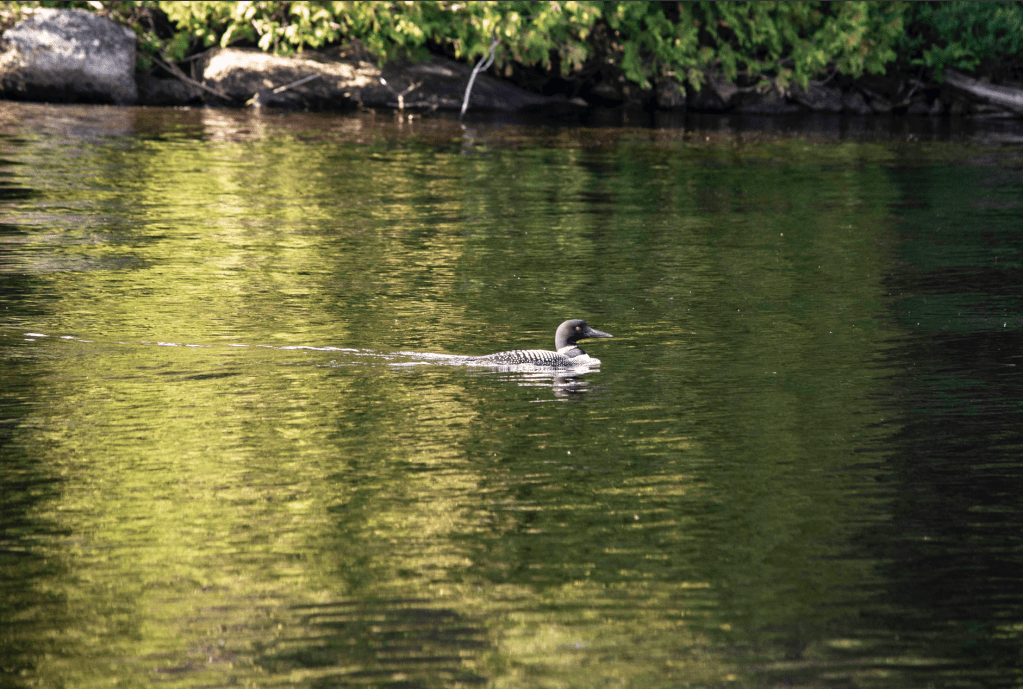
This work took place in Northern Ontario in the summer 2022, as the first sabbatical project I took on board this past year. Kevin Campbell was hosting two film crews out at his field site, and invited me to “tag along” (i.e. research) with the group. My lab been interested in the inter-play between temperature and sensory functions (plus a 4th year course I teach concerns neuro-ethology and sensory ecology/physiology, so this was a fun way to explore teaching/research overlap). Best (and only) two weeks I have ever spent working in a garage/film set. Also, no trip to northern Ontario would be complete without a picture of the resident loon from the cottage.
Citation
Tattersall, GJ and Campbell, KL. 2023. Thermoconforming rays of the star-nosed mole. J Exp Biol 2023; jeb.245127. https://doi.org/10.1242/jeb.245127
Link to the paper (50 free clicks)
Acknowledgements
We thank Josh Campbell for assistance with mole capture, and the British Broadcasting Corporation Studios Natural History Unit for accommodating this study. This research was supported by NSERC Discovery Grants to GJT (RGPIN-2020-05089) and KLC (RGPIN-2016-06562) and an NSERC Research Tools and Instrumentation Grant to GJT (NSERC RTI-2021-00278).
Data Repository
The data from the paper are shared in the following open repository: http://hdl.handle.net/10464/16980
Our study that started in 2017 has finally been published! Congratulations to Dr. Erich Eberts, who was project lead for this project while he was finishing his undergraduate degree at Loyola Marymount University, and who stuck with the writing, analysis, and manuscript handling. It is rather apt that the study was accepted and In Press around about the same time that Dr. Eberts defended his PhD!
Here is the abstract:
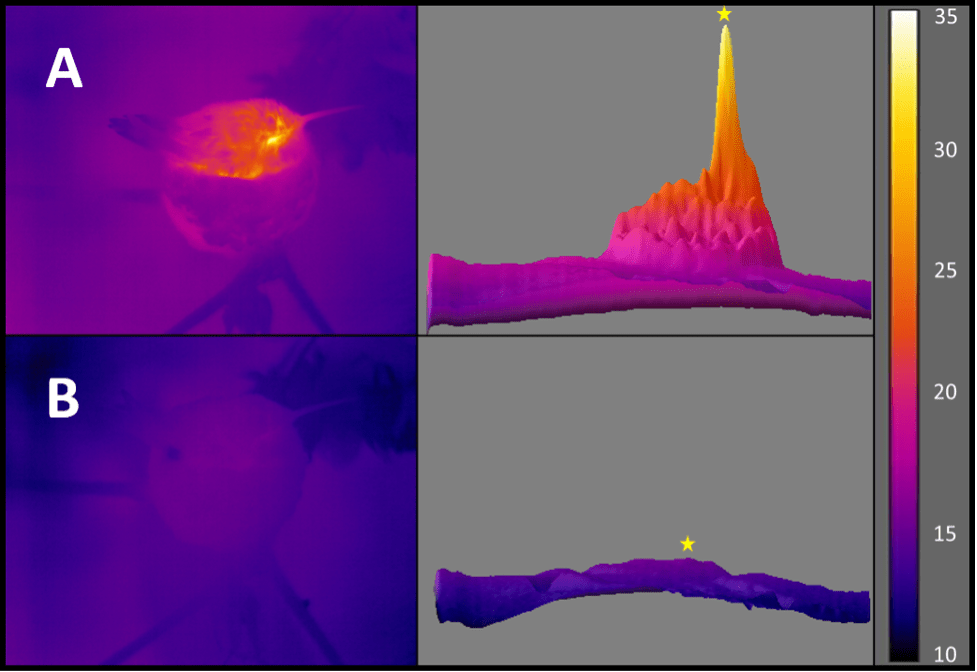
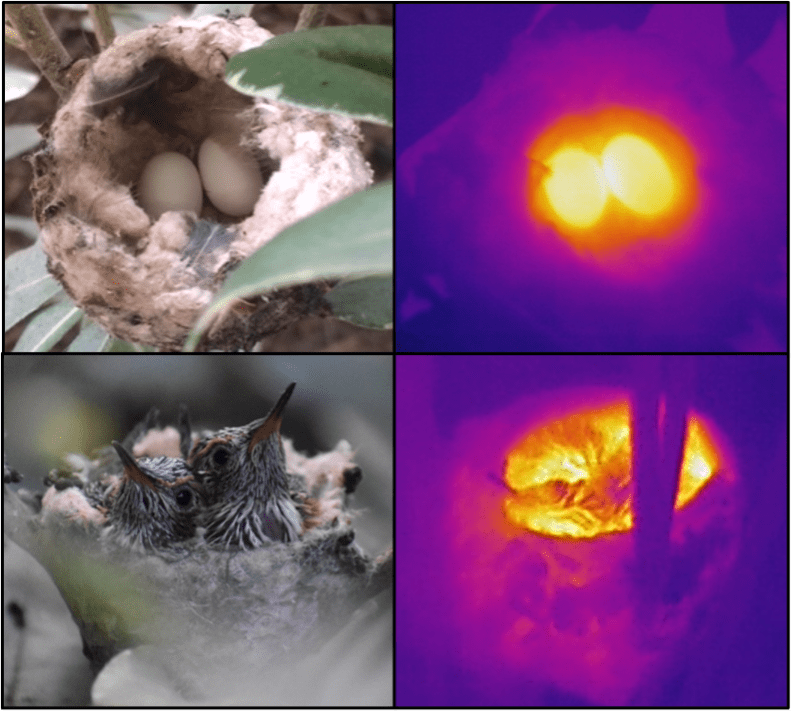
Reproduction entails a trade-off between short-term energetic costs and long-term fitness benefits. This is especially apparent in small endotherms that exhibit high mass-specific metabolic rates and live in unpredictable environments. Many of these animals use torpor, substantially reducing their metabolic rate and often body temperature to cope with high energetic demands during non-foraging periods. In birds, when the incubating parent uses torpor, the lowered temperatures that thermally sensitive offspring experience could delay development or increase mortality risk. We used thermal imaging to noninvasively explore how nesting female hummingbirds sustain their own energy balance while effectively incubating their offspring. We located 67 active Allen’s hummingbird (Selasphorus sasin) nests in Los Angeles, California and recorded nightly time-lapse thermal images at 14 of these nests for 108 nights using thermal cameras. We found that nesting females usually avoided entering torpor, with one bird entering deep torpor on two nights (2% of nights), and two other birds possibly using shallow torpor on three nights (3% of nights). We also modeled nightly energetic requirements of a bird experiencing nest temperatures vs. ambient temperature and using torpor or remaining normothermic, using data from similarly-sized broad-billed hummingbirds. Overall, we suggest that the warm environment of the nest, and possibly shallow torpor, help brooding female hummingbirds reduce their own energy requirements while prioritizing the energetic demands of their offspring.
Citation
Eberts, ER, Tattersall, GJ, Auger, PJ, Curley, M, Morado, MI, Strauss, EG, Powers, DR, Camacho, NM, Tobalske, BW, and Shankar, A. 2022. Free-living Allen’s hummingbirds (Selasphorus sasin) rarely use torpor while nesting. Journal of Thermal Biology. Available online 5 December 2022, 103391. https://doi.org/10.1016/j.jtherbio.2022.103391
Acknowledgements
We thank the numerous undergraduate assistants who completed much of the nest searching, equipment maintenance, and data collection, CURes, the LMU grounds and facilities maintenance staff for assisting with the location of and access to nests. We also thank Susan Wethington for providing broad-bill hummingbird nests. We also thank Welch lab members (University of Toronto) for helpful discussions. We especially thank our crowdfunding campaign donors who participated in the Experiment.com crowd-source campaign and FLIR Systems for their support.
 Tattersall Lab (TEMP)