Beyond Shrinking Bodies: Why One Trait may not be Enough to Predict Climate Responses

A new Perspective out today in Nature Reviews Biodiversity, by Matt Symonds, Sara Ryding, and Marcel Klaassen (Deakin University), with Josh Tabh and Andreas Nord (Lund University) and myself, tackles a problem that has been nagging at climate-change biologists for years: why do studies of a single trait, like body size, or metabolic rate, so often give inconsistent answers about how animals are responding to a warming world? Textbook “rules” like Bergmann’s (smaller bodies in warm climates) and Allen’s (bigger appendages in warm climates) might predict tidy, single-trait shifts through time as the planet heats up.

But real animals don’t have the luxury of changing one thing at a time. Morphology, physiology and behaviour are tangled together, and a change in one can mask, amplify, or completely offset a change in another. A bird that isn’t shrinking might instead be shifting its foraging schedule to the cooler part of the day; a bird with no obvious behavioural change might be quietly ramping up its evaporative cooling capacity instead. Look at any one trait in isolation and you risk concluding “no effect” when there’s really just a hidden trade-off.

Our Perspective lays out what’s currently known about how each of these three trait categories from form to function responds to geographic and temporal temperature gradients, then digs into the ways they interact with and constrain each other. Rather than just cataloguing the problem, we sketch out a path forward: comparative multi-species studies, wide-ranging single-species studies across many populations, and controlled mesocosm experiments that track morphology, physiology and behaviour simultaneously in the same individuals, so trade-offs actually become visible instead of disappearing into separate, disconnected data sets. The hope is that this kind of integrative, multi-trait thinking will let us better identify which species are truly vulnerable to climatic warming, rather than mistaking a “silent” trait for a species that isn’t responding at all.

Citation

Symonds, M.R.E., Tabh, J.K.R., Nord, A. Klaassen, M, Tattersall, G.K., and Ryding, S. Moving beyond single traits to predict endotherms’ responses to climatic warming. Nature Reviews Biodiversity (2026). https://doi.org/10.1038/s44358-026-00195-5

For access to the full paper, this is a shareable link: https://rdcu.be/ypK7CBgbw1va
Why leave the water if you are a fish?

Despite being a major event in early tetrapod evolution, many living fish species occasionally leave water, but the reasons are not always obvious. Some do it to feed, some to escape predation, and some to cope with poor water quality, although rarely for long periods of time. Another intriguing possibility is that fish may use land to help regulate their body temperature.

The mangrove rivulus (Kryptolebias marmoratus) is a particularly good species to explore this question. This small tropical fish is famous for its ability to survive on land for weeks at a time, provided the humidity levels are high. When water gets warm, mangrove rivulus will often emerge onto land, where evaporative cooling can rapidly lower body temperature, as we showed previously (https://doi.org/10.1098/rsbl.2015.0689). But leaving the water also comes at a cost: gas exchange becomes much more difficult, leading to temporary oxygen limitation and CO₂ buildup.

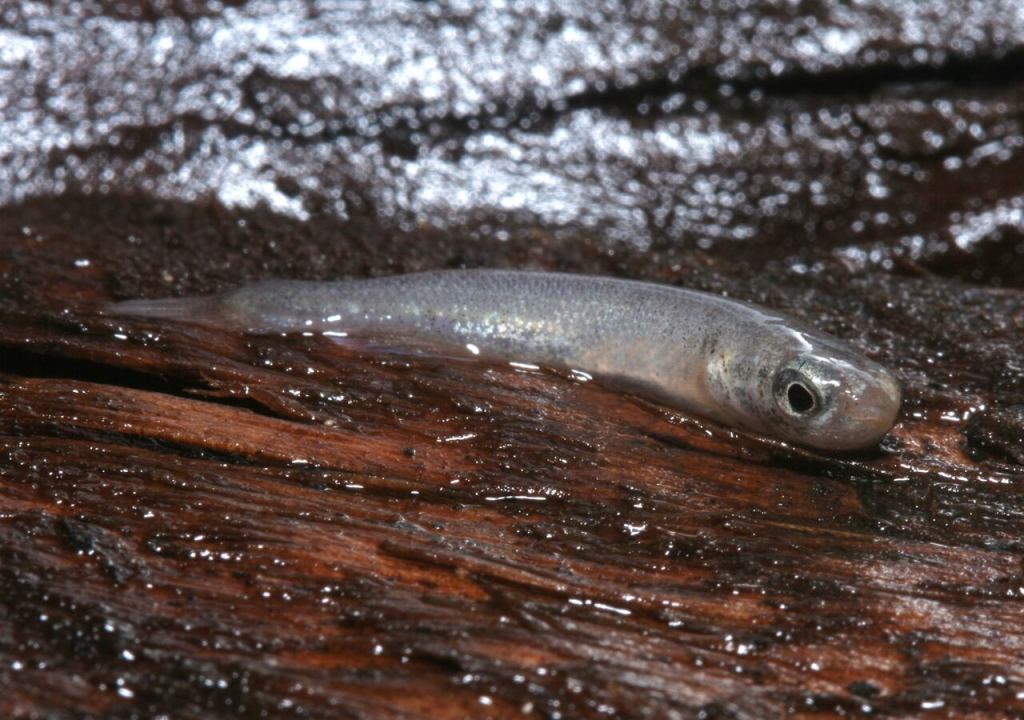
The mangrove rivulus fish (Kryptolebias marmoratus), is typically found in areas with Red Mangrove trees, like Florida, Mexico and Brazil. (Photo from Dr. Andy Turko)

In many ectotherms, low oxygen levels are known to shift thermal preferences toward cooler temperatures. That led us to ask a simple question: when rivulus go onto land, do they actively seek cooler temperatures than they would in water? 

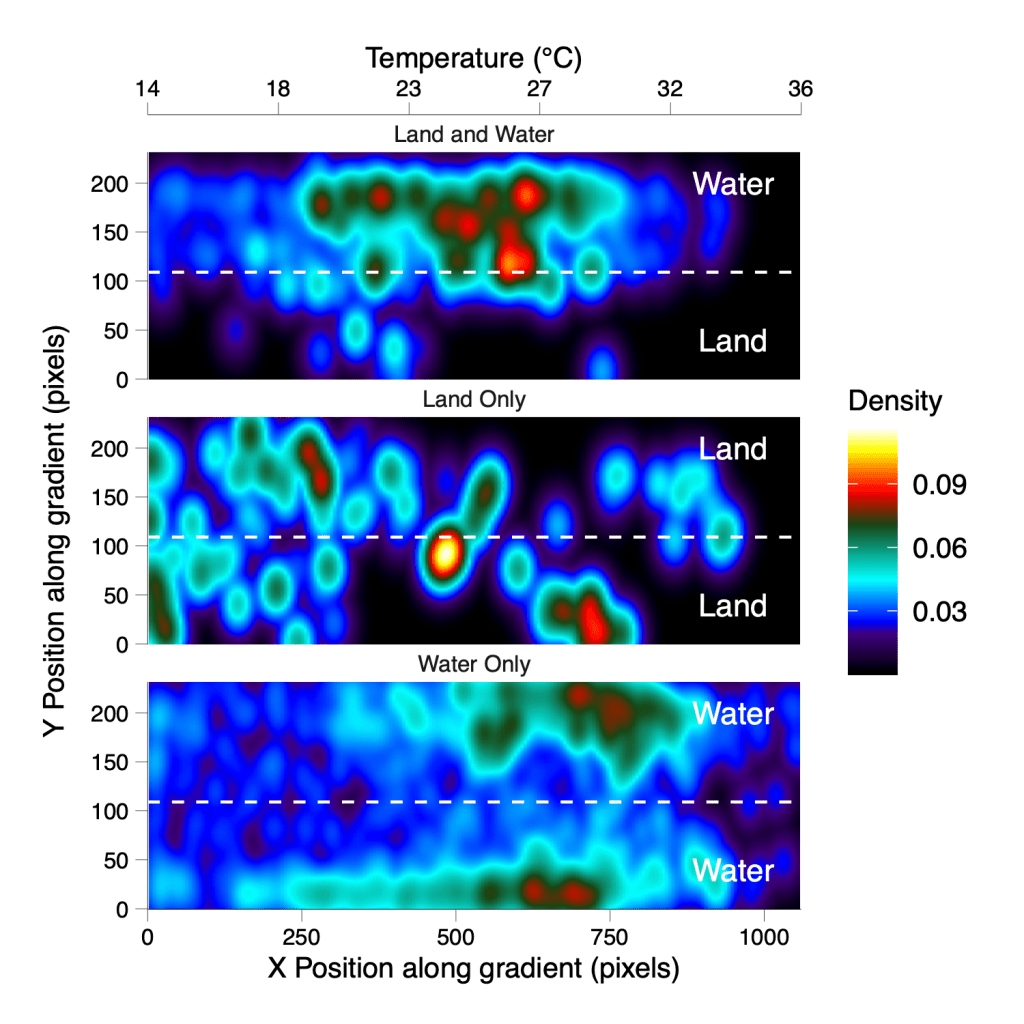
To test this, we (former Honours students Katlyn Dundas and Philip Bartel) gave fish access to choice of temperatures along a thermal gradient under three conditions: water only, land only, or a combination of both. What we found was striking. Rivulus only selected cooler temperatures when they were on land. When confined to water, their preferred temperatures remained higher, even when the same thermal options were available.

This suggests that their terrestrial emergence is not simply a passive escape from warm water to benefit from evaporative cooling. Instead, fish on land appear to actively choose cooler environments, which is a response consistent with anapyrexia, the deliberate reduction in the regulation of body temperatures (analogous but quite different from fever). In this case, leaving the water may help offset the physiological challenges of breathing air through gills that are adapted for water.

Together, these results add a new piece to the puzzle of why some fishes venture onto land. For mangrove rivulus, emerging from water may provide more than just temporary cooling. It may fundamentally change how they regulate temperature when oxygen becomes limiting.

The study is now available at the Journal of Experimental Biology website, citation below.

Citation

Dundas, KE, Bartel, PB, Turko, AJ, and Tattersall, GJ. 2026. Terrestrial emergence reflects lower thermal preferences in the mangrove rivulus (Kryptolebias marmoratus)Journal of Experimental Biology, 229 (4): jeb251829. https://doi.org/10.1242/jeb.251829

Many thanks to Brock University Library open access fund for supporting publication in the Journal of Experimental Biology!


Smooth scatter plot of mangrove rivulus space use within the thermal gradient chamber and depicting the three conditions tested.

Try Before You Buy: How Experience Shapes What Bearded Dragons Prefer

A recent paper from the lab, led by PhD student Melanie Denommé, examines a foundational assumption in reptile husbandry: that animals will inherently prefer naturalistic enclosures over simpler, more utilitarian ones. Using bearded dragons (Pogona vitticeps) as a model species, Melanie conducted preference tests in which lizards were given free choice between naturalistic and standard enclosure styles (Figure 1). Critically however, individuals had been reared under two different housing conditions and tested at multiple time points across their lives, allowing us to shed light on preferences shaped by experience. Contrary to expectations, the dragons did not show an immediate or universal preference for the more naturalistic enclosures. Instead, their choices were strongly influenced by prior housing conditions, age, and timing of the tests, demonstrating that familiarity and developmental context play an important role in how captive reptiles evaluate their environments. 

Figure 1. Graphic abstract from the study, describing the timing of the preference tests and housing conditions lizards were under at the two time points when preferences were tested. The y-axis describes a bias index, describing what proportion of time lizards spent within each enclosure style (values of 0 indicated 100% of time spent in standard, values of 1 indicate 100% of time spent in naturalistic).

Despite the absence of a consistent enclosure-level preference, the behavioural data told a more nuanced and compelling story. When lizards engaged in key species-typical behaviours such as climbing, digging, and hiding, they overwhelmingly used naturalistic resources rather than the simpler substitutes provided in standard enclosures. This finding suggests that while reptiles may not always “choose” a naturalistic enclosure outright, these environments are clearly superior for facilitating motivated behaviours that are closely linked to welfare. As part of Melanie’s broader PhD research program, this work emphasizes the importance of empirically testing husbandry assumptions rather than relying only on tradition or aesthetics alone, and it provides concrete guidance on which enclosure features matter most from the animal’s perspective. More than that, we argue that context and experience are important considerations in these kinds of studies.

Citation

Denommé, M and Tattersall, GJ. 2026. Try before you buy: Preferences for naturalistic-style enclosures are influenced by experience in bearded dragons (Pogona vitticeps)Journal of Applied Animal Behaviour Science, 295:106887. https://doi.org/10.1016/j.applanim.2025.106887  

Oxytocin Neurons and the Rhythm of Warmth and Wakefulness

A new study led by Morgane Vandendoren, Nicole Bedford, and others from Adam Nelson’s lab at the University of Wyoming has uncovered a new role for oxytocin, the so-called “love hormone.” Published in eLife, the research shows that oxytocin neurons in the paraventricular hypothalamus act as a kind of biological switch, helping mammals transition from cooler, resting states to warmer, active ones. Using mice, the team combined calcium imaging, optogenetics, and behavioural observation to show that bursts of oxytocin neuron activity reliably occur just before an animal warms up and becomes active, even in the absence of social cues. These neurons appear to coordinate both thermogenic (heat-producing) and behavioral arousal, revealing a new layer of oxytocin’s influence that bridges physiology and behaviour.

This collaboration, with contributions from several Wyoming students and collaborators, demonstrates how oxytocin not only shapes social and maternal behaviours but also tunes the body’s thermal and arousal cycles. My lab’s involvement was a bit on the periphery, but focused on the thermal imaging and coding pipelines that helped visualize these rapid transitions in body temperature and activity. Together, the findings expand our understanding of oxytocin beyond its traditional social context, showing that it also plays a key role in the daily rhythm of energy balance and physiological readiness.

The University of Wyoming have a more detailed press release for the study here:

https://www.uwyo.edu/news/2025/10/uw-researchers-discover-love-hormone-has-role-in-regulating-daily-thermoregulatory-patterns-of-rest-and-arousal.html

This paper was published in eLife, following an open peer review approach that I am still trying to wrap my head around. The citation is below, and so formally the study is published in preprint format, with us having still to upload a revised manuscript which will address some of the points raised by the reviewers.

Citation

Vandendoren, M, Rogers, JF, Landen, JG, Killmer, S, Alimiri, B, Pohlman, C, Tattersall, GJ, Bedford, NL, Nelson, AC. 2025. Oxytocin neurons signal state-dependent transitions to thermogenesis and behavioral arousal in social and non-social settings. eLife, 14: RP108212. https://doi.org/10.7554/eLife.108212.1