Despite being a major event in early tetrapod evolution, many living fish species occasionally leave water, but the reasons are not always obvious. Some do it to feed, some to escape predation, and some to cope with poor water quality, although rarely for long periods of time. Another intriguing possibility is that fish may use land to help regulate their body temperature.
The mangrove rivulus (Kryptolebias marmoratus) is a particularly good species to explore this question. This small tropical fish is famous for its ability to survive on land for weeks at a time, provided the humidity levels are high. When water gets warm, mangrove rivulus will often emerge onto land, where evaporative cooling can rapidly lower body temperature, as we showed previously (https://doi.org/10.1098/rsbl.2015.0689). But leaving the water also comes at a cost: gas exchange becomes much more difficult, leading to temporary oxygen limitation and CO₂ buildup.
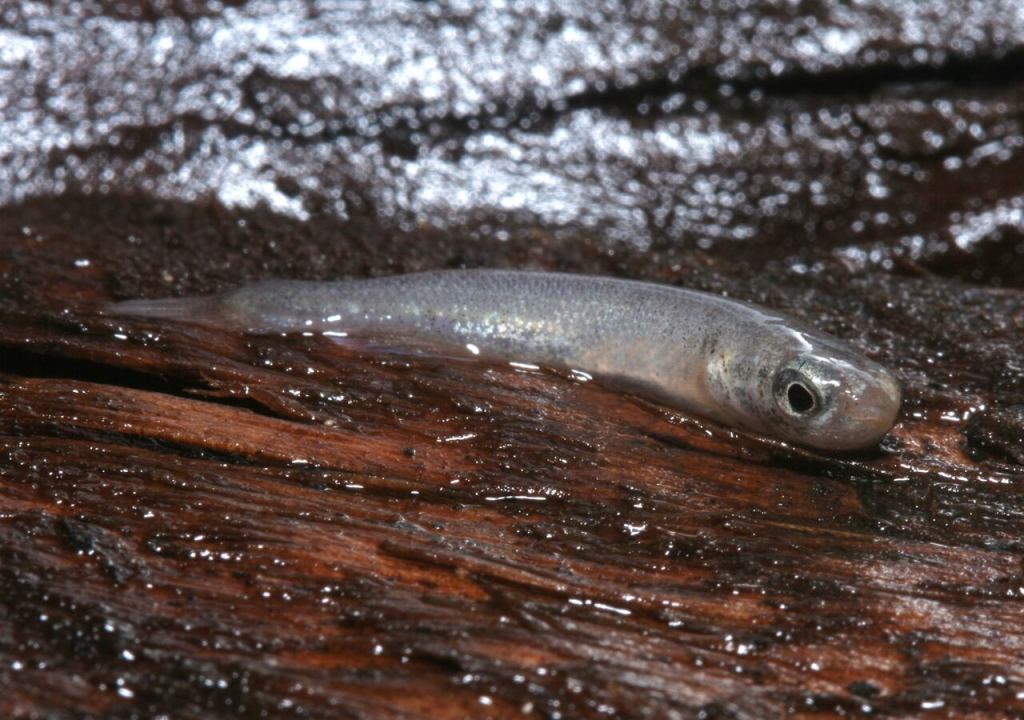
The mangrove rivulus fish (Kryptolebias marmoratus), is typically found in areas with Red Mangrove trees, like Florida, Mexico and Brazil. (Photo from Dr. Andy Turko)
In many ectotherms, low oxygen levels are known to shift thermal preferences toward cooler temperatures. That led us to ask a simple question: when rivulus go onto land, do they actively seek cooler temperatures than they would in water?
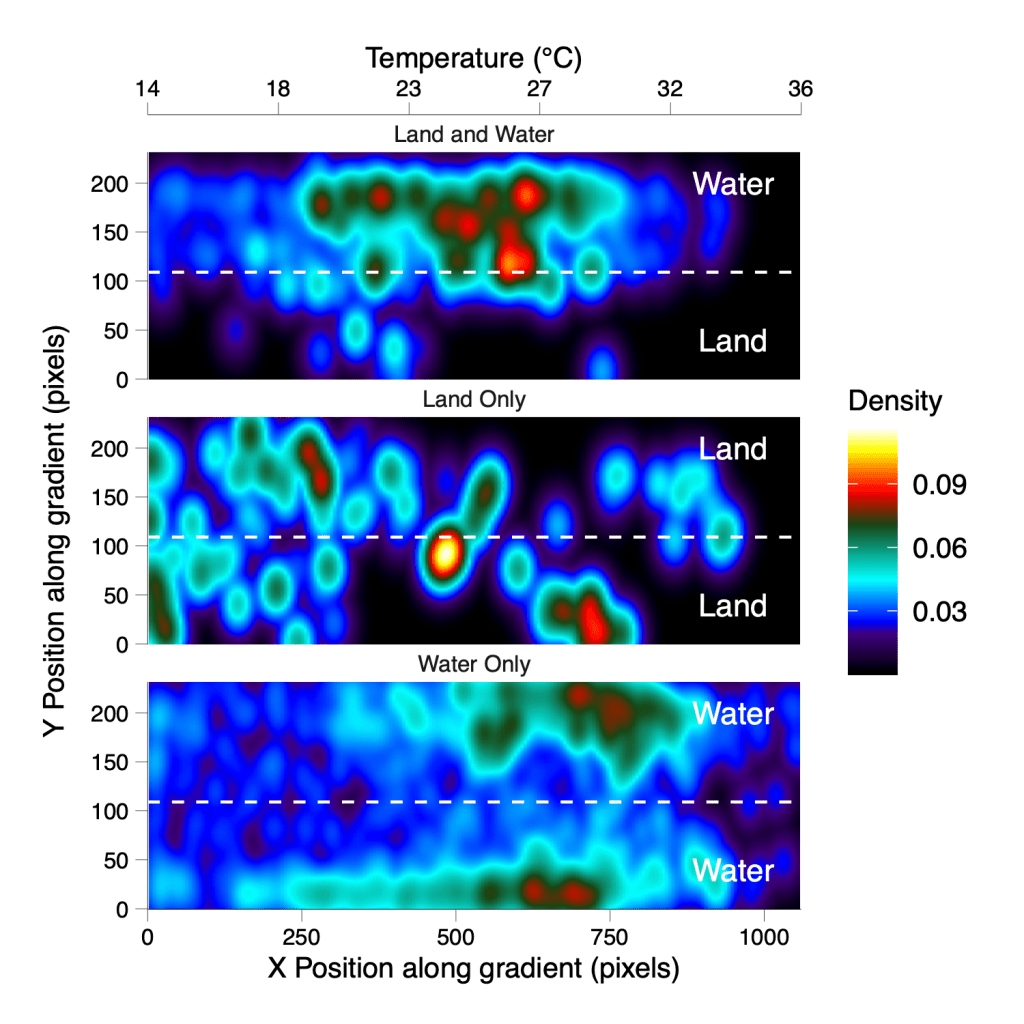
To test this, we (former Honours students Katlyn Dundas and Philip Bartel) gave fish access to choice of temperatures along a thermal gradient under three conditions: water only, land only, or a combination of both. What we found was striking. Rivulus only selected cooler temperatures when they were on land. When confined to water, their preferred temperatures remained higher, even when the same thermal options were available.
This suggests that their terrestrial emergence is not simply a passive escape from warm water to benefit from evaporative cooling. Instead, fish on land appear to actively choose cooler environments, which is a response consistent with anapyrexia, the deliberate reduction in the regulation of body temperatures (analogous but quite different from fever). In this case, leaving the water may help offset the physiological challenges of breathing air through gills that are adapted for water.
Together, these results add a new piece to the puzzle of why some fishes venture onto land. For mangrove rivulus, emerging from water may provide more than just temporary cooling. It may fundamentally change how they regulate temperature when oxygen becomes limiting.
The study is now available at the Journal of Experimental Biology website, citation below.
Citation
Dundas, KE, Bartel, PB, Turko, AJ, and Tattersall, GJ. 2026. Terrestrial emergence reflects lower thermal preferences in the mangrove rivulus (Kryptolebias marmoratus). Journal of Experimental Biology, 229 (4): jeb251829. https://doi.org/10.1242/jeb.251829
Many thanks to Brock University Library open access fund for supporting publication in the Journal of Experimental Biology!
Smooth scatter plot of mangrove rivulus space use within the thermal gradient chamber and depicting the three conditions tested.
In the cold, temperate forests, long before spring fully arrives, blue-spotted salamanders (Ambystoma laterale) are already on the move. These small amphibians begin migrating to their breeding ponds while snow still blankets the ground and ice lingers on and in the soil. This is a risky strategy for a species that can’t survive freezing. Our recent Natural History note, spearheaded by Dr. Danilo Giacometti and published in the Canadian Journal of Zoology, documents this remarkable early migration and presents new thermal imaging evidence that blue-spotted salamanders achieve this while at sub-zero body temperatures.
For amphibians like blue-spotted salamanders, freezing is typically fatal. Ice crystals rupture cells, leading to irreversible damage. Unlike some frogs that survive being partially frozen thanks to natural antifreezes like glucose, blue-spotted salamanders are known to be freeze-intolerant.
But in spring 2022 in Algonquin Park, during a brief window of opportunity we observed salamanders actively migrating, even while walking across or sheltering beside ice. Using high-resolution thermal imaging, we measured their skin temperatures (a reliable proxy for body temperature in such small animals) and found several individuals with body temperatures as low as –3.6°C, which is well below their known freezing point. Our findings suggest that blue-spotted salamanders may rely on supercooling, where their body fluids remain liquid even below freezing. This strategy has been shown in lab studies to be possible down to about –1.5°C, but our field data suggest some individuals may supercool even further, albeit briefly.
One of the most surprising observations was that several salamanders were in direct contact with ice, a known trigger for freezing of fluids that are supercooled. Despite this, they were active and moving, raising fascinating questions about how they might avoid nucleation (the start of ice formation) in natural settings or if they can manage short-term freeze/thaw during their migration.
Thermal images of blue spotted salamanders migrating at sub-zero temperatures. Temperatures reflect variation in microhabitats encountered by animals during movement, and these observed skin temperatures fall below the known freezing points and minimum supercooling points for Ambystoma laterale.
Why would salamanders take such a risk by migrating so early? There may be several evolutionary advantages. By arriving at breeding ponds early before other species, they reduce competition and potentially avoid predators. Early breeding also gives their offspring more time to grow before winter returns.
Our study opens new questions about the limits of amphibian cold tolerance and the role of behavior and microhabitat selection. More research is needed to understand whether these salamanders truly remain supercooled for long periods or whether they occasionally freeze and recover, a possibility hinted at but not yet proven in this species.
For now, our thermal images offer a rare glimpse into the early spring lives of blue-spotted salamanders and reveal that there’s still much to learn about how animals survive the cold.
Giacometti, D, Moldowan, P, and Tattersall, GJ. 2025. Sub-zero body temperatures during early spring migration in blue-spotted salamanders (Ambystoma laterale). Canadian Journal of Zoology, https://doi.org/10.1139/cjz-2025-0045
Postscript: An Editor’s Lament
The journey that this very brief natural history note took to reach publication was unnecessarily arduous. We originally submitted this study to Canadian Field Naturalist in August 2022. In that initial submission, we heard back after 16 months from the editor that the manuscript had been peer reviewed (3 reviewers) and with straightforward revisions; we supplied revisions within 30 days in January 2024. Then all went quiet with the journal for months. We reached out on numerous occasions to the editors in 2024 about whether the manuscript was still being handled, whether we would hear a decision, and received responses that indicated that editing it was not a high priority.
So, after 2.5 years sitting with Canadian Field Naturalist, we withdrew the manuscript (Spring 2025) and submitted it to CJZ where I am pleased to note that the manuscript underwent a normal peer review process.
As an editor (the average turnaround time for 1st submit Major/Minor decision papers I handle is 51 days – this includes the time to find reviewers), I was saddened at how CFN handled the initial manuscript. There were extenuating circumstances in that the associate editor handling the initial submission passed away, but we were assured by the editorial team that the manuscript would not get ‘lost’ in the re-shuffle.
As a society journal, it deserves support, but 2.5 years to handle a short manuscript does not set a good example for early career researchers; this is almost a lifetime for a graduate student.
I understand that editors need to make difficult decisions and in the course of those duties often reject studies (for fit or for other reasons). But timely decision making is just as important or more so for early career researchers. All the academic editors I know are full-time employed with academic and research jobs, but I have never heard any of them indicate or hint to an author that their submission is not a priority. If the work is not appropriate for the journal, the most humane decision is to reject it in a timely manner.
Anyhow, I am pleased with the Canadian Journal of Zoology’s handling of the manuscript. It was professional and straightforward and now we can move on from this experience.
I do think that we need to support natural history style studies/observations, so I can only hope that by sharing this, those that read this may push for change at journals that could use the support.
Bearded dragons (Pogona vitticeps) have become one of the most popular pet reptiles and in many cases are contributing to research as well. But as their popularity has soared, so too has the need to better understand what these lizards actually need to live well in captivity. Our latest study, recently published in PLOS ONE, examines whether giving bearded dragons more “naturalistic” resources within their enclosures actually improves their well-being. These enclosures included features like climbing structures, loose substrate, and multiple hiding spots, compared to standard setups with only basic furnishings. We expected these more complex spaces to help the lizards behave more naturally and experience less stress. While the naturalistic enclosures did offer better thermal variety (important for ectothermic animals like reptiles), we were surprised to find that they did not have a clear effect on how active the lizards were, how they used their space, or how often they showed signs of stress or relaxation.
Interestingly, only female lizards housed long-term in naturalistic enclosures showed lower levels of physiological stress (measured through ratios of white blood cells), suggesting that any benefits might be subtle or sex-specific.
Overall, our findings show that simply adding complexity to an enclosure isn’t enough to guarantee better welfare. It may be that lizards don’t perceive naturalistic and standard enclosures as very different, or that enclosure size matters more than what’s in it. For reptile owners and researchers alike, the take-home message is this: meaningful welfare improvements require us to think beyond aesthetics or what human caretakers assume is “good” or “natural”—we need to constantly evaluate our efforts and ask the animals themselves what they think.
Denommé, M and Tattersall, GJ. 2025. Influence of enclosure design on the behaviour and welfare of Pogona vitticeps. PLoS One 20(6): e0322682 https://doi.org/10.1371/journal.pone.0322682
A bearded dragon on top of cork bark. Photo credit Dr. Danilo Giacometti.
Shorebirds across Australia are experiencing notable changes in size and shape, offering a vivid example of climate change’s impact on wildlife. In a recent publication in Ecology Letters (McQueen et al), using comprehensive 46-year study involving over 200,000 observations across 25 species we show widespread declines in body size (“shrinking”) and concurrent increases in bill length (“shape-shifting”). These shifts appear to align with thermal adaptation, where smaller bodies and elongated bills would help dissipate heat more effectively in warmer environments. However, we also found that smaller species exhibited the most pronounced changes, while long-distance migratory species showed weaker trends, possibly due to physical constraints needed for efficient flight over vast distances.
Interestingly, while bill lengths have generally increased over time, they shortened following exposure to recent hot summers, hinting at complex evolutionary trade-offs between short-term vs. long-term climatic fluctuations. We suggest these changes may reflect not only adaptations for thermoregulation but also responses to nutritional stress or other environmental pressures. These findings emphasize the dual role of climate change as both a selective force and a stressor. As global temperatures continue to rise, understanding these morphological changes is crucial for predicting their effects on species survival and the ecosystems they inhabit.
Field sites and climate information for northern and southern Australian shorebird populations. A and B show locations where shorebirds have been sampled by members of the VWSG and AWSG (black circles) and nearby Australian Bureau of Meteorology weather stations with summer temperature data from 1970-2021 (blue triangles); colour scale shows average summer daily maximum temperatures (December-February).
To read more about the study, it in open access below.
Citation
A. McQueen, M. Klaassen, G. J. Tattersall, S. Ryding, Victorian Wader Study Group, Australasian Wader Studies Group, R. Atkinson, R. Jessop, C. J. Hassell, M. Christie, A. Fröhlich, M. R. E. Symonds. 2024. Shorebirds are shrinking and shape-shifting: declining dody size and lengthening bills in the past half-century.Ecology Letters. 27:e14513. https://doi.org/10.1111/ele.14513
Amphibians have long fascinated researchers due to their unique life cycles and environmental sensitivities, but many aspects about the biology of fossorial (i.e., burrowing) species remain shrouded in mystery. Fossorial amphibians like the Spotted Salamander (Ambystoma maculatum)spend most of their lives underground, emerging to the surface only briefly to breed or forage. In our latest paper, we address some of the intrinsic and extrinsic factors that may trigger emergence from overwintering by evaluating the interplay between temperature, gravity, and innate migratory cues over salamander behaviour.
Our study focussed on the role of soil temperature inversion—a seasonal shift where surface soils warm faster than deeper layers—in signalling salamanders to leave their winter refuges and begin their overland journey to breeding ponds. Using a vertical thermal gradient in the lab, we examined how salamanders responded to temperature cues at different depths and whether their activity levels changed with temperature shifts that mimicked soil temperature inversion. Our findings suggested that salamanders are not only tolerant of a wide thermal range but are also displaying a circannual phenomenon known as “migration restlessness”. Migration restlessness is characterised by a surge in movement often seen in animals preparing to migrate. Coupled with negative geotaxis, a tendency to move upward against gravity, this restless behaviour may explain why salamanders begin their spring migration at just the right moment, maximising their chances of reproductive success while avoiding the dangers of emerging too early and potentially freezing.
Representation of soil temperature inversion in the forest surrounding Bat Lake, Algonquin Provincial Park, ON, Canada, from where the spotted salamanders were collected. A. Schematic of the vertical thermal gradient used to assess the effects of thermal inversion and gravity on salamander behaviour. Thermal image of the active (B) and overwintering (C) thermal gradients used in the study. The thermal gradient was always kept at a 45º angle relative to the horizontal axis, imitating underground burrows.
Sped-up time-lapse of a male Ambystoma maculatum tested within the active thermal gradient. Frames were taken every 30 s, for a total of 18 h of experiment (20 frames/sec).
For a link to an interview with the first author ECR, Danilo Giacometti, please see the following link.
For a link to the paper, please see the citation below.
Citation
Giacometti D., Moldowan P. D., Tattersall G. J.; Ups and downs of fossorial life: migration restlessness and geotaxis may explain overwintering emergence in the Spotted Salamander. J Exp Biol 2024; jeb.249319. doi: https://doi.org/10.1242/jeb.249319
As global temperatures rise, animals are facing mounting pressure to adapt, and Australian birds are no exception. Our recent research (from Sara Ryding’s PhD research) has examined over 5,000 museum specimens, representing 78 bird species across Australia, revealing clear changes in their body and appendage sizes. These changes are aligned with two well-known ecological principles: Bergmann’s rule, which predicts smaller body sizes in warmer climates in endotherms, and Allen’s rule, which argues that animals (namely endotherms) will develop larger appendages to regulate body heat. Consistent with these theories, our study found that birds are experiencing a long-term decrease in body size, particularly in absolute wing length, while their appendages, such as bills and tarsi (leg bones), are getting larger relative to their bodies. This phenomenon, often referred to as “shape-shifting,” is a widespread response to the increasing temperatures driven by climate change.
Interestingly, our research also highlights a more complex picture when it comes to short-term responses. While long-term trends show a clear increase in appendage size to aid thermoregulation, birds displayed smaller appendages in the years following hotter temperatures. This suggests that while birds are gradually adapting to rising temperatures over time, short-term weather events may create different selection pressures that affect growth and development. Factors like food availability and reproductive challenges could contribute to these opposing trends. This study underscores the intricate balance between long-term evolutionary changes and the immediate pressures exerted by fluctuating environmental conditions, offering critical insights into how birds—and potentially other animals—might continue to respond to our rapidly changing world.
For a link to the study, please see the citation below.
Citation
Ryding, McQueen, A, Klaassen, M, Tattersall, GJ, and Symonds, MRE. 2024. Long- and short-term responses to climate change in body and appendage size of diverse Australian birds. Global Change Biology, 30:e17517. https://doi.org/10.1111/gcb.17517


 Tattersall Lab (TEMP)