Why leave the water if you are a fish?

Despite being a major event in early tetrapod evolution, many living fish species occasionally leave water, but the reasons are not always obvious. Some do it to feed, some to escape predation, and some to cope with poor water quality, although rarely for long periods of time. Another intriguing possibility is that fish may use land to help regulate their body temperature.

The mangrove rivulus (Kryptolebias marmoratus) is a particularly good species to explore this question. This small tropical fish is famous for its ability to survive on land for weeks at a time, provided the humidity levels are high. When water gets warm, mangrove rivulus will often emerge onto land, where evaporative cooling can rapidly lower body temperature, as we showed previously (https://doi.org/10.1098/rsbl.2015.0689). But leaving the water also comes at a cost: gas exchange becomes much more difficult, leading to temporary oxygen limitation and CO₂ buildup.
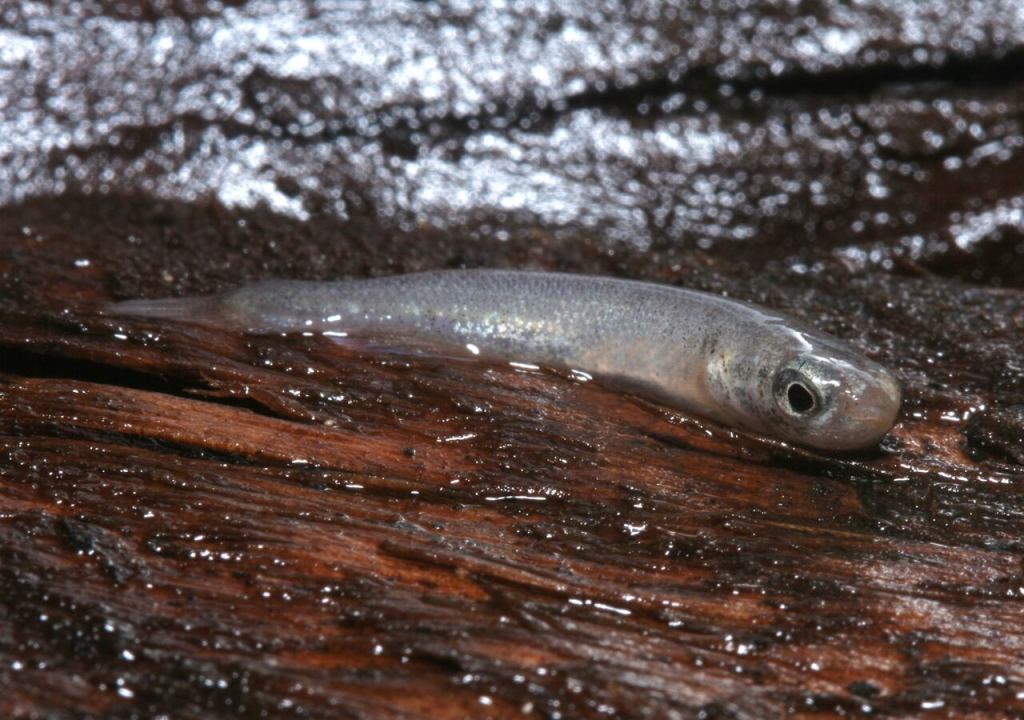
The mangrove rivulus fish (Kryptolebias marmoratus), is typically found in areas with Red Mangrove trees, like Florida, Mexico and Brazil. (Photo from Dr. Andy Turko)

In many ectotherms, low oxygen levels are known to shift thermal preferences toward cooler temperatures. That led us to ask a simple question: when rivulus go onto land, do they actively seek cooler temperatures than they would in water? 

To test this, we (former Honours students Katlyn Dundas and Philip Bartel) gave fish access to choice of temperatures along a thermal gradient under three conditions: water only, land only, or a combination of both. What we found was striking. Rivulus only selected cooler temperatures when they were on land. When confined to water, their preferred temperatures remained higher, even when the same thermal options were available.

This suggests that their terrestrial emergence is not simply a passive escape from warm water to benefit from evaporative cooling. Instead, fish on land appear to actively choose cooler environments, which is a response consistent with anapyrexia, the deliberate reduction in the regulation of body temperatures (analogous but quite different from fever). In this case, leaving the water may help offset the physiological challenges of breathing air through gills that are adapted for water.

Together, these results add a new piece to the puzzle of why some fishes venture onto land. For mangrove rivulus, emerging from water may provide more than just temporary cooling. It may fundamentally change how they regulate temperature when oxygen becomes limiting.

The study is now available at the Journal of Experimental Biology website, citation below.

Citation

Dundas, KE, Bartel, PB, Turko, AJ, and Tattersall, GJ. 2026. Terrestrial emergence reflects lower thermal preferences in the mangrove rivulus (Kryptolebias marmoratus)Journal of Experimental Biology, 229 (4): jeb251829. https://doi.org/10.1242/jeb.251829

Many thanks to Brock University Library open access fund for supporting publication in the Journal of Experimental Biology!
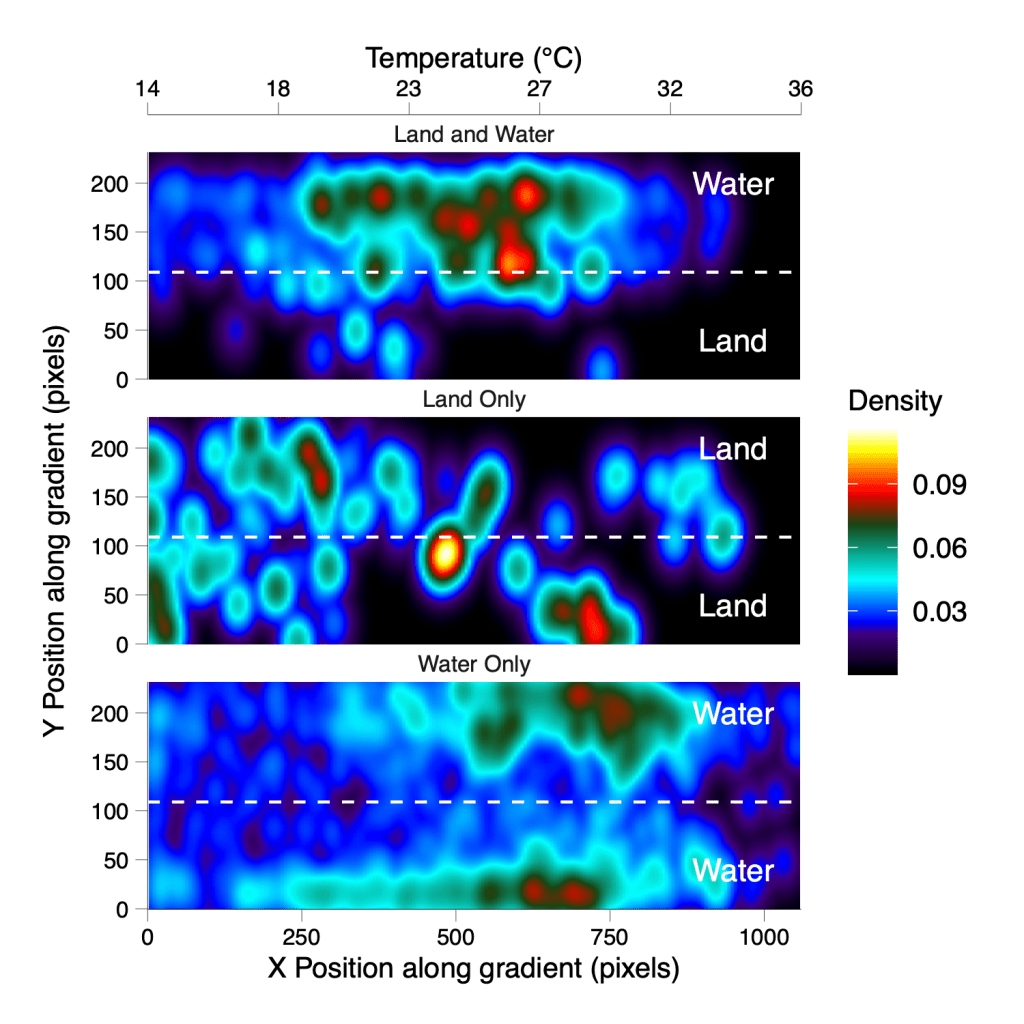

Smooth scatter plot of mangrove rivulus space use within the thermal gradient chamber and depicting the three conditions tested.

Fish get the “rotten egg gas” chills.

At long last, resulting from herculean efforts of a number of former students, our paper is published. Out today in Royal Society Open Science, our paper entitled: “Hydrogen sulfide exposure reduces thermal set point in zebrafish” represents the efforts of two honours students (JC Shaw and CD Dobell) and the writing and analytical skills of a great PDF and colleague (DA Skandalis).

Here is a link to the study and full citation:

Skandalis DA, Dobell CD, Shaw JC, Tattersall GJ. 2020 Hydrogen sulfide exposure reduces thermal set point in zebrafish. R. Soc. Open Sci. 7: 200416.

https://royalsocietypublishing.org/doi/10.1098/rsos.200416

We tested whether dissolved H2S in the water will alter thermal preference. Previously, work in mice has suggested that mice could be induced to adopt a “hibernation-like” state, although there was some doubt (in the literature) as to whether H2S signalled a change in thermoregulatory state or simply acted as a metabolic inhibitor. By testing this in zebrafish, we could test formally whether they prefer cooler temperatures with H2S exposure, and they did. Not only did they choose to cool down, but they continued to make thermoregulatory decisions, swimming back and forth between cool and warmer water, suggesting they are still making thermoregulatory decisions and not simply caught in the cold water. So…yeah, complicated. H2S might induce a behavioural anapyrexia (a lowered thermal set-point). We discuss the potential environmental and neurophysiological context in the paper for those interested. The rotten egg reference is to the smell of H2S gas.

To conduct this study, we used a system built by Brock University’s Technical Services and employed in our research lab that allows us to track fish in a two chamber thermal shuttle box:

Schematic of the Shuttle Box System (see Figure S1 in the paper).

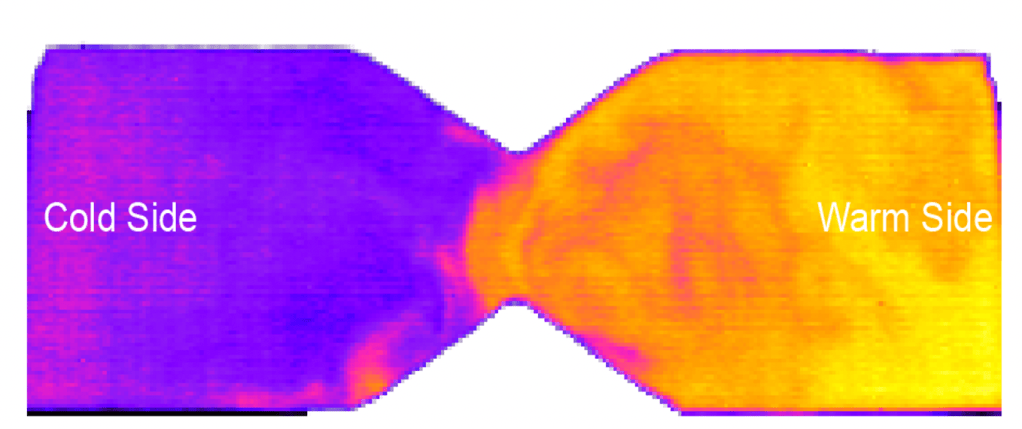
This setup allows us to heat and cool a tank and track the fish’s choices over time. Here is a thermal image depicting an earlier version of the shuttle box (correcting the spill over of warm-water in the centre can be corrected using baffles and a circular chamber system, but I haven’t taken a new picture with the thermal camera during the pandemic lockdown):

There was some considerable interest in developing H2S as a therapeutic to put mammals and/or tissues/organs into a suspended state. It is intriguing that animals like zebrafish that can behaviourally regulate body temperature continue to do so under this exposure. Anaprexic stategies are commonly seen in ectotherms and perhaps by hijacking an innate signalling system, H2S evokes this response.

Bridgeman now the Master

When he left the lab to write up his thesis, he was but the learner…now, HE is the Master.

Congratulations, Justin Bridgeman for a successful defence! Justin’s thesis earlier today was on “Behavioural thermoregulation and escape behaviour in the round goby”.

Thanks to the selfless efforts of the committee members (Dr. Gaynor Spencer, Dr. Liette Vasseur, and Dr. Patricia Wright), external examiner (Dr. Dennis Higgs, U Windsor), and committee chair (Dr. Cheryl McCormick).

Thank to all the lab mates for supporting Justin and welcoming him back for his brief visit.

All the best in the future Justin! We look forward to the manuscripts…and for a place to crash when we visit you in Halifax! 😉