Shape-Shifting Shorebirds: How Wing Length Is Responding to a Warming World

We’re excited to share the publication of a new paper in Ecography, led by PhD candidate Sara Ryding (Deakin University, collaboration with Matt Symonds Lab), which explores how climate change may be reshaping the morphology of migratory shorebirds. Using an incredibly extensive dataset of nearly 19,000 juvenile birds across 11 species sampled over 43 years, Sara investigated whether warming temperatures are causing changes in relative wing length, a trait thought to play a role in thermoregulation. Interestingly, while juvenile shorebirds migrating to tropical northern Australia exhibited a consistent increase in relative wing length over time, no such trend was observed in their temperate southern counterparts.

Crucially, the study found no evidence that these morphological changes are driven by developmental temperatures at the breeding grounds, suggesting that these changes are unlikely to be short-term plastic responses. Instead, they may reflect long-term, potentially evolutionary responses to the environmental conditions experienced at non-breeding sites. This work highlights how subtle, climate-linked changes in body shape (e.g. “shape-shifting”) may be occurring unevenly across populations, depending on local climatic pressures.

Congratulations to Sara on this significant contribution to our understanding of how wildlife is adapting to our changing planet.

Citation

Ryding, S, McQueen, A, Symonds, MRE, Tattersall, GJ, Victorian Wader Study Group, Australasian Wader Studies Group, Rogers, DI, Atkinson, R, Jessop, R, Hassell, CJ, Christie, M, Ross, TA, and Klassen, M. 2025. Shape-shifting in relative wing length of juvenile shorebirds: no evidence of developmental temperatures driving morphological changes. Ecography, 2025: e07801. doi: 10.1002/ecog.07801
Shape-Shifting in the Face of Climate Change: The Long and the Short of How Australian Birds Are Adapting

As global temperatures rise, animals are facing mounting pressure to adapt, and Australian birds are no exception. Our recent research (from Sara Ryding’s PhD research) has examined over 5,000 museum specimens, representing 78 bird species across Australia, revealing clear changes in their body and appendage sizes. These changes are aligned with two well-known ecological principles: Bergmann’s rule, which predicts smaller body sizes in warmer climates in endotherms, and Allen’s rule, which argues that animals (namely endotherms) will develop larger appendages to regulate body heat. Consistent with these theories, our study found that birds are experiencing a long-term decrease in body size, particularly in absolute wing length, while their appendages, such as bills and tarsi (leg bones), are getting larger relative to their bodies. This phenomenon, often referred to as “shape-shifting,” is a widespread response to the increasing temperatures driven by climate change.

Interestingly, our research also highlights a more complex picture when it comes to short-term responses. While long-term trends show a clear increase in appendage size to aid thermoregulation, birds displayed smaller appendages in the years following hotter temperatures. This suggests that while birds are gradually adapting to rising temperatures over time, short-term weather events may create different selection pressures that affect growth and development. Factors like food availability and reproductive challenges could contribute to these opposing trends. This study underscores the intricate balance between long-term evolutionary changes and the immediate pressures exerted by fluctuating environmental conditions, offering critical insights into how birds—and potentially other animals—might continue to respond to our rapidly changing world.

For a link to the study, please see the citation below.

Citation

Ryding, McQueen, A, Klaassen, M, Tattersall, GJ, and Symonds, MRE. 2024. Long- and short-term responses to climate change in body and appendage size of diverse Australian birds. Global Change Biology, 30:e17517. https://doi.org/10.1111/gcb.17517

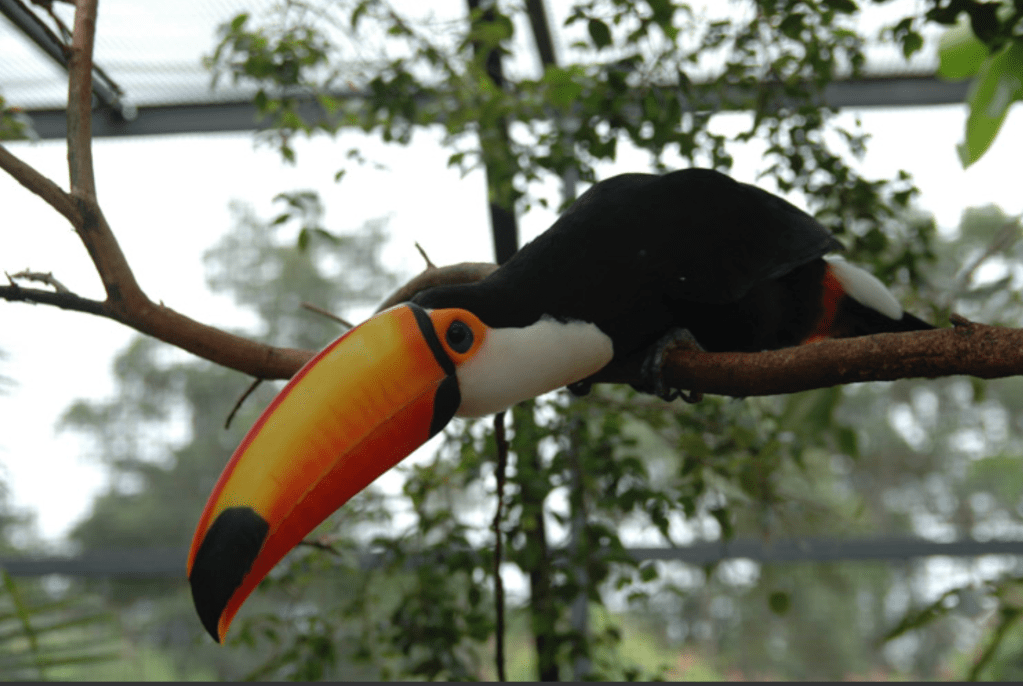
Toucans make do without bill heat transfer, but with a cost.

Our paper “Energetic costs of bill heat exchange demonstrate contributions to thermoregulation at high temperatures in toco toucans (Ramphastos toco)” was just accepted for publication in the Journal of Experimental Biology.

This research project was from Jussara Chaves’ MSc thesis done at UNESP, Rio Claro, Brasil with Dr. Denis Andrade.

We showed that insulating the bill does not alter the width of the thermal neutral zone, suggesting the toco toucan has the capacity to compensate for the sudden reduction in heat transfer from the bill, but at higher temperatures the normal role of the bill in assisting with heat dissipation becomes more clear. Birds with insulated bills show significantly higher metabolic costs of heat dissipation. Since the primary avenues for dissipating heat at high ambient temperatures are evaporative cooling, the compensatory mechanisms involve an increased reliance on panting and gular fluttering, which are metabolically costly. These results indicate that while heat dissipation through the bill does not contribute significantly to widening of the TNZ, it may well be critically important in assisting body temperature regulation at higher temperatures extending above the upper limit of the TNZ. 

Toco toucan (Ramphastos toco)

For a great summary of the article by Kathryn Knight, please see the Inside JEB article “Toucans’ ostentatious beaks do not expand their thermoneutral zone“.

Link

Access the paper from this Link (50 free clicks) or at the JEB website.

Citation

Chaves, J.N, Tattersall, GJ, and Andrade, DV. 2023. Energetic costs of bill heat exchange demonstrate contributions to thermoregulation at high temperatures in toco toucans (Ramphastos toco). Journal of Experimental Biology, 226, jeb245268. doi:10.1242/jeb.245268.

Acknowledgements

We wish to acknowledge Guilherme Gomes and Ariovaldo Pereira da Cruz-Neto for assistance with experiments and preliminary data analysis, and Luá T. Timpone and Adriana Fuga for assistance with animal care.

Thermal adaptations best explain biogeographic rules in Australian shorebirds

Bergmann’s and Allen’s rules state that endotherms should be larger and have shorter appendages in cooler climates. However, the drivers of these rules are not clear. Both rules could be explained by adaptation for improved thermoregulation, including plastic responses to temperature in early life.

Our study has just been published in Nature Communications here:

https://www.nature.com/articles/s41467-022-32108-3

Non-thermal explanations are also plausible as climate impacts other factors that influence size and shape, including starvation risk, predation risk, and foraging ecology. In this study, we assess the potential drivers of Bergmann’s and Allen’s rules in 30 shorebird species using extensive field data (>200,000 observations). We show birds in hot, tropical northern Australia have longer bills and smaller bodies than conspecifics in temperate, southern Australia, conforming with both ecogeographical rules.

Heat map of Australia, including the sample sites where morphological data from >30 species of shorebirds were used.

This pattern is consistent across ecologically diverse species, including migratory birds that spend early life in the Arctic. Our findings best support the hypothesis that thermoregulatory adaptation to warm climates drives latitudinal patterns in shorebird size and shape.

Acknowledgements

Dr. Alexandra McQueen (Post-Doc at Deakin University) did most of the work on this manuscript. The Victorian Wader Study Group and the Australasian Water Studies Group were responsible for the 46 years worth of data collected that made this study possible. My thanks to Matt Symonds and Marcel Dekker for including me in this study, a result made possible from an Australian Research Council Discovery Grant.

Citation

McQueen A, Klaassen M, Tattersall GJ, Atkinson R, Jessop R, Hassell CJ, Christie M; Victorian Wader Study Group; Australasian Wader Studies Group, Symonds MRE.  2022. Thermal adaptation best explains Bergmann’s and Allen’s Rules across ecologically diverse shorebirds. Nat Commun 13, 4727. https://doi.org/10.1038/s41467-022-32108-3

Toucans of the atlantic

Earlier this summer, I was lucky enough to visit the Isle of May, Scotland to fulfill a long-time ambition to collect thermal image data on puffins in the wild. Ever since we published our work on the toucan in 2009, I have wanted to study the puffins, examining evidence for elevated capacity to control or distribute body heat through their uniquely colourful bill. Living in a cool climate with a large radiator like their bill presents a unique opportunity to test our hypotheses. In spring of 2018 I managed to visit the Elliston, Newfoundland puffin colony to start this project, but the distance to view a little too far to obtain high quality results.

Well, the short story is that they do show an extraordinary capacity to do so! Here is just a sample image (from the 200 Gb of videos):

Active and basking Atlantic puffins show capacity for intense heat transfer to the bill. The one above has recently landed back at the colony, presumably foraging although in this case, there is no evidence of food. Other images show cool bills, as we have seen in many other bird species, demonstrating the vasomotor control over blood flow to the bill is a fairly generalised phenomenon.
Infrared thermal video of an Atlantic puffin in May 2018 – early arrival at nest and investigating burrows.
Atlantic puffin in the rain.

If I only had the time to conduct the data analysis, I could put some numbers on these values. I certainly have my work cut out for me, examining those returning from the water with food vs. those basking and resting. I have a few other thoughts about these data that I hope to extract.

Many thanks must go to the town of Elliston, Newfoundland and the Atlantic puffin colony there, the Centre for Ecology and Hydrology (UK), the Isle of May (Scotland) Scientists, and especially Mark Newell for hosting me at the Isle of May, and Mike Harris for introducing us. Sorry it took so long to post this.

Further Reading

Tattersall, GJ, Arnaout, B, and Symonds, MRE.  2017.  The evolution of the avian bill as a thermoregulatory organ. Biological Reviews 92: 1630-1656. doi:10.1111/brv.12299

Greenberg, R, Cadena, V, Danner, RM, and Tattersall GJ. 2012. Heat loss may explain bill size differences between birds occupying different habitats. PLoS One, 7: e40933. 

Symonds, MRE and Tattersall, GJ. 2010. Geographical variation in bill size across bird species provides evidence for Allen’s rule.American Naturalist. 176: 188-197.

Tattersall, GJ, Andrade, DV, and Abe, AS. 2009. Heat exchange from the toucan bill reveals a controllable vascular thermal radiator.Science, 325: 468-470.

Shape Shifting Birds – PhD Opportunity

Please consider applying for this PhD Opportunity in Australia to work with my colleague, Dr Matthew Symonds on Shape-Shifting Birds.

This research forms part of an ARC Discovery Project (PI: Symonds; CI: Klassen & Tattersall) whose goal is to determine whether changes in body shape are an evolutionary response to climate change. Endothermic animals (such as birds) have a range of adaptations for dealing with the temperatures they experience. One such adaptation is body shape: birds in warmer climates tend to have large extremities (bills and legs), increasing their surface area and enabling loss of excess heat. Adaptations to climate (and hence climate change) can occur quickly, and there is evidence of significant increases in bird extremities in recent years – a novel potential consequence of climate change. Whether this represents an evolutionary response to climate change is unknown, nor do we know what characteristics make specific bird species liable to respond to climate change in this way, or what the likely consequences of such responses are.

The student will undertake an extensive comparative analysis of Australian birds, designed to identify a) which bird species are showing changes in body shape (bill and leg morphology); b) what ecological (life- history, behaviour, habitat) factors determine such responses; c) whether these changes relate to fitness/survival and d) whether such changes are linked to long-term populations trends in Australian birds.

The project will involve extensive work in Australian museum collections, measuring bird morphology using traditional and modern (3D-scanning) techniques. There is also a strong analytical component, involving use of long-term field data on Australian bird species as well as phylogenetic comparative analysis of large-scale ecological data sets for Australian birds.

Please send an application letter, together with your CV, to Dr Matthew Symonds (matthew.symonds@deakin.edu.au).

Further information can be found in our review papers:

Symonds, MRE and Tattersall, GJ. 2010. Geographical variation in bill size across bird species provides evidence for Allen’s rule.American Naturalist. 176: 188-197.

Tattersall, GJ, Arnaout, B, and Symonds, MRE.  2017.  The evolution of the avian bill as a thermoregulatory organ. Biological Reviews 92: 1630-1656. doi:10.1111/brv.12299