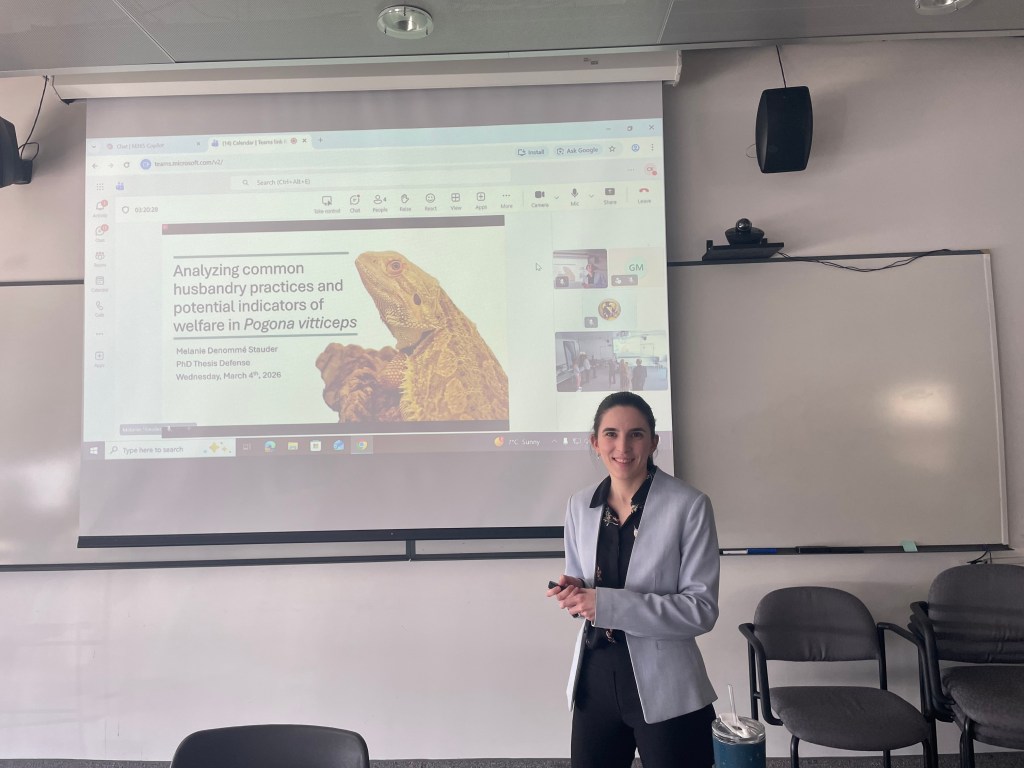
I am really proud to congratulate Dr. Melanie Denommé Stauder for her successful PhD Defence!
The thesis entitled “Analyzing common husbandry practises and potential indicators of welfare in Pogona vitticeps” was defended today in front of her examining committee: Dr. Noam Miller (External, Wilfrid Laurier University), Dr. Dustin Duncan (External within Brock University), Dr. Michael Owen (Chair, Brock University), Dr. Georgia Mason (University of Guelph), Dr. Gaynor Spencer, and myself.
Great discussions were had and some new aphorisms learned. “We are not reptiles”, and “we are never as smart as we need to be” are some gems of wisdom to take away from the defence.
Despite being a major event in early tetrapod evolution, many living fish species occasionally leave water, but the reasons are not always obvious. Some do it to feed, some to escape predation, and some to cope with poor water quality, although rarely for long periods of time. Another intriguing possibility is that fish may use land to help regulate their body temperature.
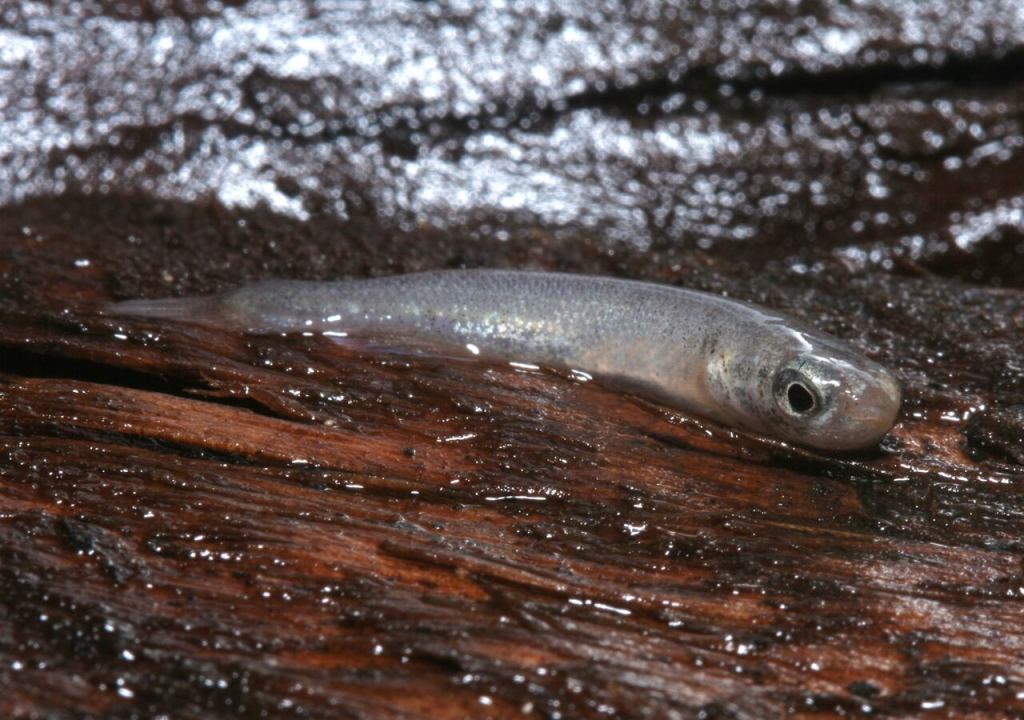
The mangrove rivulus (Kryptolebias marmoratus) is a particularly good species to explore this question. This small tropical fish is famous for its ability to survive on land for weeks at a time, provided the humidity levels are high. When water gets warm, mangrove rivulus will often emerge onto land, where evaporative cooling can rapidly lower body temperature, as we showed previously (https://doi.org/10.1098/rsbl.2015.0689). But leaving the water also comes at a cost: gas exchange becomes much more difficult, leading to temporary oxygen limitation and CO₂ buildup.
The mangrove rivulus fish (Kryptolebias marmoratus), is typically found in areas with Red Mangrove trees, like Florida, Mexico and Brazil. (Photo from Dr. Andy Turko)
In many ectotherms, low oxygen levels are known to shift thermal preferences toward cooler temperatures. That led us to ask a simple question: when rivulus go onto land, do they actively seek cooler temperatures than they would in water?
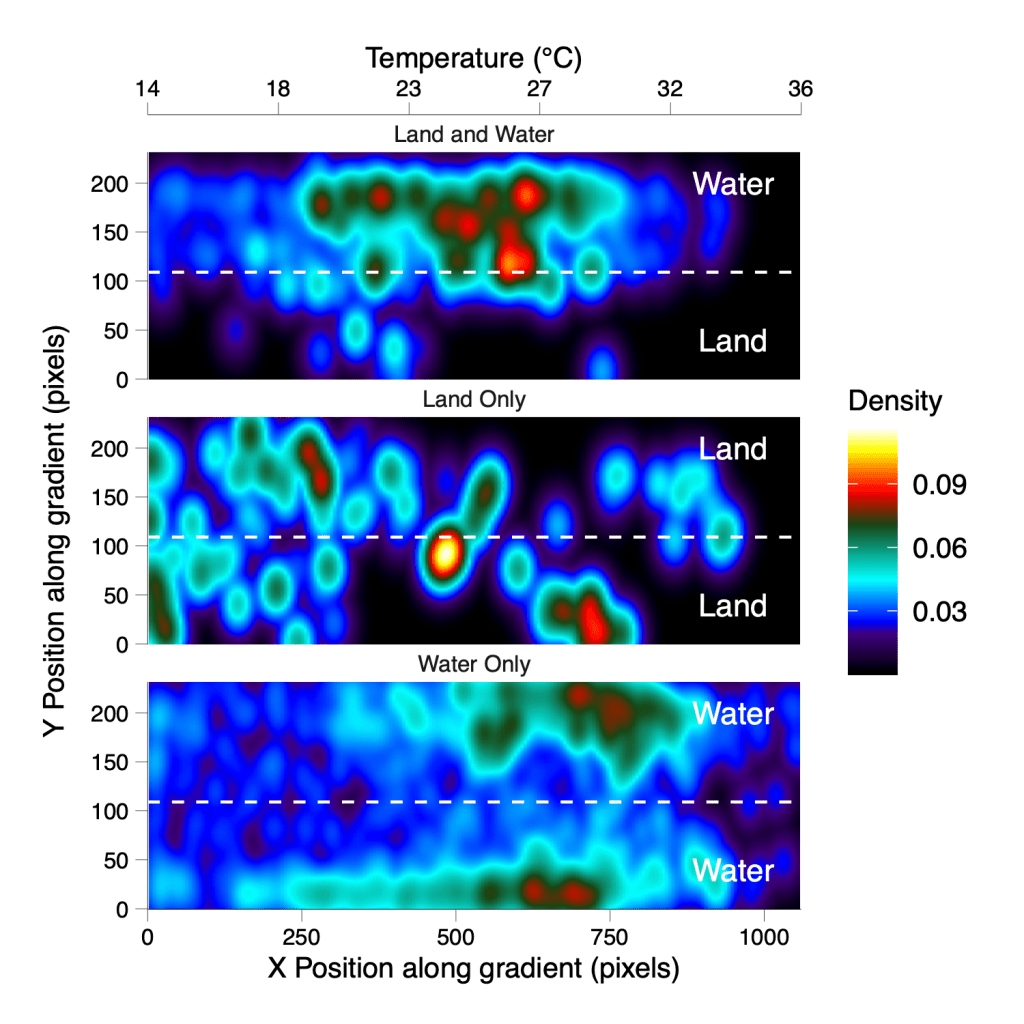
To test this, we (former Honours students Katlyn Dundas and Philip Bartel) gave fish access to choice of temperatures along a thermal gradient under three conditions: water only, land only, or a combination of both. What we found was striking. Rivulus only selected cooler temperatures when they were on land. When confined to water, their preferred temperatures remained higher, even when the same thermal options were available.
This suggests that their terrestrial emergence is not simply a passive escape from warm water to benefit from evaporative cooling. Instead, fish on land appear to actively choose cooler environments, which is a response consistent with anapyrexia, the deliberate reduction in the regulation of body temperatures (analogous but quite different from fever). In this case, leaving the water may help offset the physiological challenges of breathing air through gills that are adapted for water.
Together, these results add a new piece to the puzzle of why some fishes venture onto land. For mangrove rivulus, emerging from water may provide more than just temporary cooling. It may fundamentally change how they regulate temperature when oxygen becomes limiting.
The study is now available at the Journal of Experimental Biology website, citation below.
Citation
Dundas, KE, Bartel, PB, Turko, AJ, and Tattersall, GJ. 2026. Terrestrial emergence reflects lower thermal preferences in the mangrove rivulus (Kryptolebias marmoratus). Journal of Experimental Biology, 229 (4): jeb251829. https://doi.org/10.1242/jeb.251829
Many thanks to Brock University Library open access fund for supporting publication in the Journal of Experimental Biology!
Smooth scatter plot of mangrove rivulus space use within the thermal gradient chamber and depicting the three conditions tested.
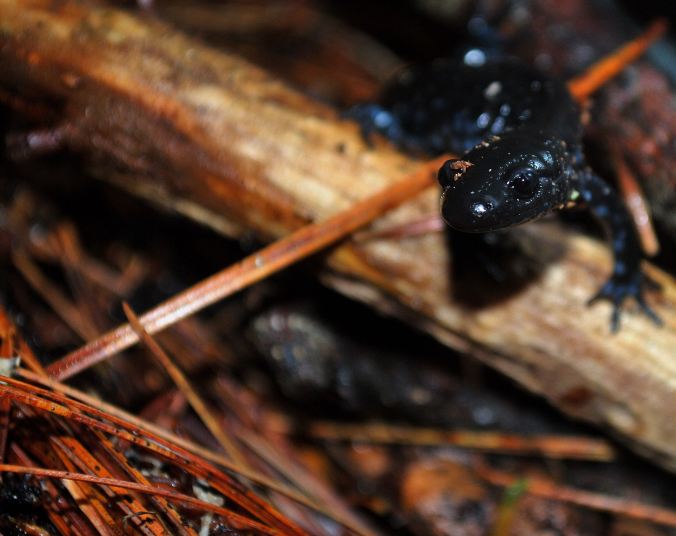
Measuring body temperature should seem straightforward, but in ectotherms, the act of measuring can be part of the problem. For especially small amphibians in particular, common approaches like cloacal thermometry require restraint and direct contact, raising the possibility that handling itself alters body temperature before it is even recorded. In this study, we asked a simple but important question: does brief, gentle handling measurably change the body temperature of salamanders?
Using infrared thermography, we examined how short periods of handling affected skin temperature in two closely related mole salamanders, the blue-spotted salamander (Ambystoma laterale) and the spotted salamander (A. maculatum). We also combined field measurements with controlled laboratory experiments to tease apart the effects of physical contact, heat transfer, and behaviour.
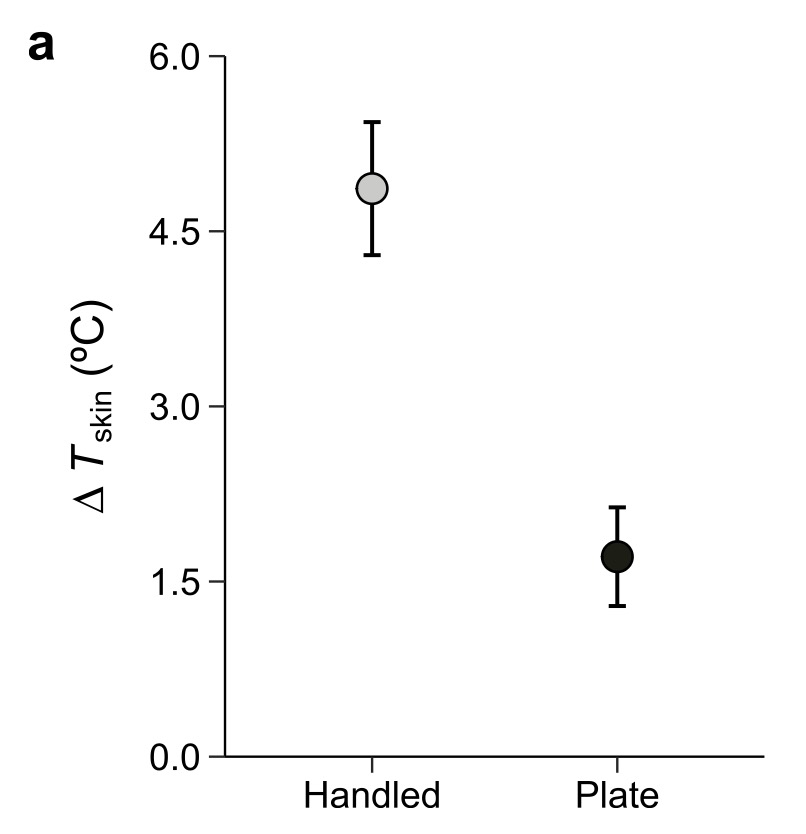
The answer was clear. Even short handling periods caused salamanders to warm rapidly. In the field, handled animals were consistently warmer than unhandled controls, with the head warming more than the rest of the body. Not surprisingly, smaller salamanders showed larger temperature changes, suggesting body size plays an important role in how quickly heat is gained.
Change in skin temperature of yellow spotted salamanders either handled or placed on a warm plate (set to the same temperature as human handler).
In the lab, salamanders placed on a warm surface (set to hand temperature) also warmed up, but not as much as animals that were actually handled. This tells us that handling is not simply about contact with something warm. While we don’t know precisely why yet, the most likely explanation is that salamanders manifest a stronger cardiovascular response to human handling and the heat that they pick up is transferred more quickly throughout the body.
Temperature changes matter from a behavioural perspective. Warmer salamanders were more likely to become active, regardless of whether that warmth came from handling or from contact with a warm surface. That means handling can influence not only the temperature we measure, but also the behaviour we observe. Taken together, these results highlight a subtle but important issue: brief handling can rapidly alter body temperature, sometimes at rates comparable to experimental heat stress studies. For researchers, this has implications for data accuracy in thermal biology. More broadly, it is a reminder that even well-intentioned, gentle handling can have unintended physiological effects, especially for small ectotherms.
Some caveats: this study is not to be interpreted as alarmist. Warming up from being in contact with warm temperatures is a pretty obvious expectation. These results would only have possible impacts for studies concerned with accurate temperature measurements or those that perform very brief behavioural observations during or immediately after handling (which is probably very rare) that are temperature dependent. And as one of the reviewers of the manuscript rightly pointed out, we measured surface temperatures, which will differ and lag with core temperature measurements.
We do note that there is a related study appearing in the same issue of the Journal of Thermal Biology highlighting similar cautions as this one, and that particular study actually measures core temperature of really tiny frogs!
Citation
Giacometti, D, Montes, LF, Denommé, M, Andrade, DV, and Tattersall, GJ. Handle with care: the thermal consequences of short-term handling in mole salamanders. Journal of Thermal Biology, 136: 104390. https://doi.org/10.1016/j.jtherbio.2026.104390
A lot of news has happened in the past month and I have been negligent about updating. All lab members have had awards, scholarships, and bursary announcements that warrant celebration!
• Melane Denommé Stauder (PhD student) will be receiving the Jack Miller Graduate Award for the Faculty of Mathematics and Sciences this coming year. Stay tuned for a future announcement as I’m not sure this is public knowledge yet.
• Harry Kumbhani received the Ontario Paper Thorold Foundation Graduate Award, in recognition of academic standing and that his eco-physiological research is aligned with environmental research.
• Harry Kumbhani also was lead author on a paper published in Canadian Journal of Zoology that was highlighted as Editor’s choice.
• Danilo Giacometti’s (recent PhD graduate) Journal of Experimental Biology paper from 2025 was a finalist for the JEB Outstanding Paper Prize. Link still to come.
• Sophie Gauthier (Biological Sciences Honours Thesis Student in my lab) was awarded the Niagara Birds Bursary for her work in an ecologically relevant project (awarded to a Biological Sciences student engaged in a research project in ecology or related discipline.
Congratulations to all and a huge thanks to those who have supported student and ECR success through the funding of these scholarships and establishment of these recognitions.
Danilo Giacometti was interviewed by NPR a couple of weeks ago about our blue-spotted salamander paper in CJZ, and the interview came out today (December 24, 2025). Check it out here:
A recent paper from the lab, led by PhD student Melanie Denommé, examines a foundational assumption in reptile husbandry: that animals will inherently prefer naturalistic enclosures over simpler, more utilitarian ones. Using bearded dragons (Pogona vitticeps) as a model species, Melanie conducted preference tests in which lizards were given free choice between naturalistic and standard enclosure styles (Figure 1). Critically however, individuals had been reared under two different housing conditions and tested at multiple time points across their lives, allowing us to shed light on preferences shaped by experience. Contrary to expectations, the dragons did not show an immediate or universal preference for the more naturalistic enclosures. Instead, their choices were strongly influenced by prior housing conditions, age, and timing of the tests, demonstrating that familiarity and developmental context play an important role in how captive reptiles evaluate their environments.
Figure 1. Graphic abstract from the study, describing the timing of the preference tests and housing conditions lizards were under at the two time points when preferences were tested. The y-axis describes a bias index, describing what proportion of time lizards spent within each enclosure style (values of 0 indicated 100% of time spent in standard, values of 1 indicate 100% of time spent in naturalistic).
Despite the absence of a consistent enclosure-level preference, the behavioural data told a more nuanced and compelling story. When lizards engaged in key species-typical behaviours such as climbing, digging, and hiding, they overwhelmingly used naturalistic resources rather than the simpler substitutes provided in standard enclosures. This finding suggests that while reptiles may not always “choose” a naturalistic enclosure outright, these environments are clearly superior for facilitating motivated behaviours that are closely linked to welfare. As part of Melanie’s broader PhD research program, this work emphasizes the importance of empirically testing husbandry assumptions rather than relying only on tradition or aesthetics alone, and it provides concrete guidance on which enclosure features matter most from the animal’s perspective. More than that, we argue that context and experience are important considerations in these kinds of studies.
Citation
Denommé, M and Tattersall, GJ. 2026. Try before you buy: Preferences for naturalistic-style enclosures are influenced by experience in bearded dragons (Pogona vitticeps). Journal of Applied Animal Behaviour Science, 295:106887. https://doi.org/10.1016/j.applanim.2025.106887
Our new paper, led by MSc student Harry Kumbhani and building on fieldwork conducted by former MSc student Curtis Abney, explores how Eastern Garter Snakes (Figure 1) navigate the complex thermal landscapes of wetlands in southern Ontario. Using detailed operative temperature models, which were copper snake replicas equipped with temperature loggers, our team quantified how three adjacent habitat types (closed forest, mixed shrub, and open peat; Figure 2) differ in the thermal opportunities they provide. Although the open peat habitat consistently reached the warmest temperatures and offered the greatest access to the snakes’ preferred thermal range, it also exhibited extreme highs that frequently exceeded the species’ upper thermal tolerance. This created a paradox: the habitat with the highest apparent thermal quality was also the riskiest.
Figure 1. Eastern garter snake (Thamnophis sirtalis sirtalis).Figure 2. A snake’s eye view of the canopy cover within the three habitat types.
Despite expectations that snakes might favour the warmest habitat, we found that Eastern Garter Snakes were most abundant in the intermediate, mixed-shrub habitat, a pattern we describe as a “Goldilocks effect.” This middle habitat provided a balance of sun and shade, offering both basking opportunities and safe retreat sites, and avoided the thermal instability and overheating risk found in the open peat. The study suggests that thermal quality is more nuanced than simply being warm enough; stability, heterogeneity, and safety from extreme temperatures all shape how snakes use their environment. These findings highlight the importance of structurally diverse habitats for temperate reptiles and offer valuable insights into how changing landscapes may influence thermoregulation and habitat choice in the future.
Citation
Kumbhani, HAW, Abney, CR, Giacometti, D, and Tattersall, GJ. 2025. Operative temperatures of Eastern Garter Snakes (Thamnophis sirtalis sirtalis) reveal a Goldilocks effect for habitat use. Canadian Journal of Zoology, 103: 1-15. https://doi.org/10.1139/cjz-2025-0090
A new study led by Morgane Vandendoren, Nicole Bedford, and others from Adam Nelson’s lab at the University of Wyoming has uncovered a new role for oxytocin, the so-called “love hormone.” Published in eLife, the research shows that oxytocin neurons in the paraventricular hypothalamus act as a kind of biological switch, helping mammals transition from cooler, resting states to warmer, active ones. Using mice, the team combined calcium imaging, optogenetics, and behavioural observation to show that bursts of oxytocin neuron activity reliably occur just before an animal warms up and becomes active, even in the absence of social cues. These neurons appear to coordinate both thermogenic (heat-producing) and behavioral arousal, revealing a new layer of oxytocin’s influence that bridges physiology and behaviour.
This collaboration, with contributions from several Wyoming students and collaborators, demonstrates how oxytocin not only shapes social and maternal behaviours but also tunes the body’s thermal and arousal cycles. My lab’s involvement was a bit on the periphery, but focused on the thermal imaging and coding pipelines that helped visualize these rapid transitions in body temperature and activity. Together, the findings expand our understanding of oxytocin beyond its traditional social context, showing that it also plays a key role in the daily rhythm of energy balance and physiological readiness.
The University of Wyoming have a more detailed press release for the study here:
This paper was published in eLife, following an open peer review approach that I am still trying to wrap my head around. The citation is below, and so formally the study is published in preprint format, with us having still to upload a revised manuscript which will address some of the points raised by the reviewers.
Citation
Vandendoren, M, Rogers, JF, Landen, JG, Killmer, S, Alimiri, B, Pohlman, C, Tattersall, GJ, Bedford, NL, Nelson, AC. 2025. Oxytocin neurons signal state-dependent transitions to thermogenesis and behavioral arousal in social and non-social settings. eLife, 14: RP108212. https://doi.org/10.7554/eLife.108212.1
In the cold, temperate forests, long before spring fully arrives, blue-spotted salamanders (Ambystoma laterale) are already on the move. These small amphibians begin migrating to their breeding ponds while snow still blankets the ground and ice lingers on and in the soil. This is a risky strategy for a species that can’t survive freezing. Our recent Natural History note, spearheaded by Dr. Danilo Giacometti and published in the Canadian Journal of Zoology, documents this remarkable early migration and presents new thermal imaging evidence that blue-spotted salamanders achieve this while at sub-zero body temperatures.
For amphibians like blue-spotted salamanders, freezing is typically fatal. Ice crystals rupture cells, leading to irreversible damage. Unlike some frogs that survive being partially frozen thanks to natural antifreezes like glucose, blue-spotted salamanders are known to be freeze-intolerant.
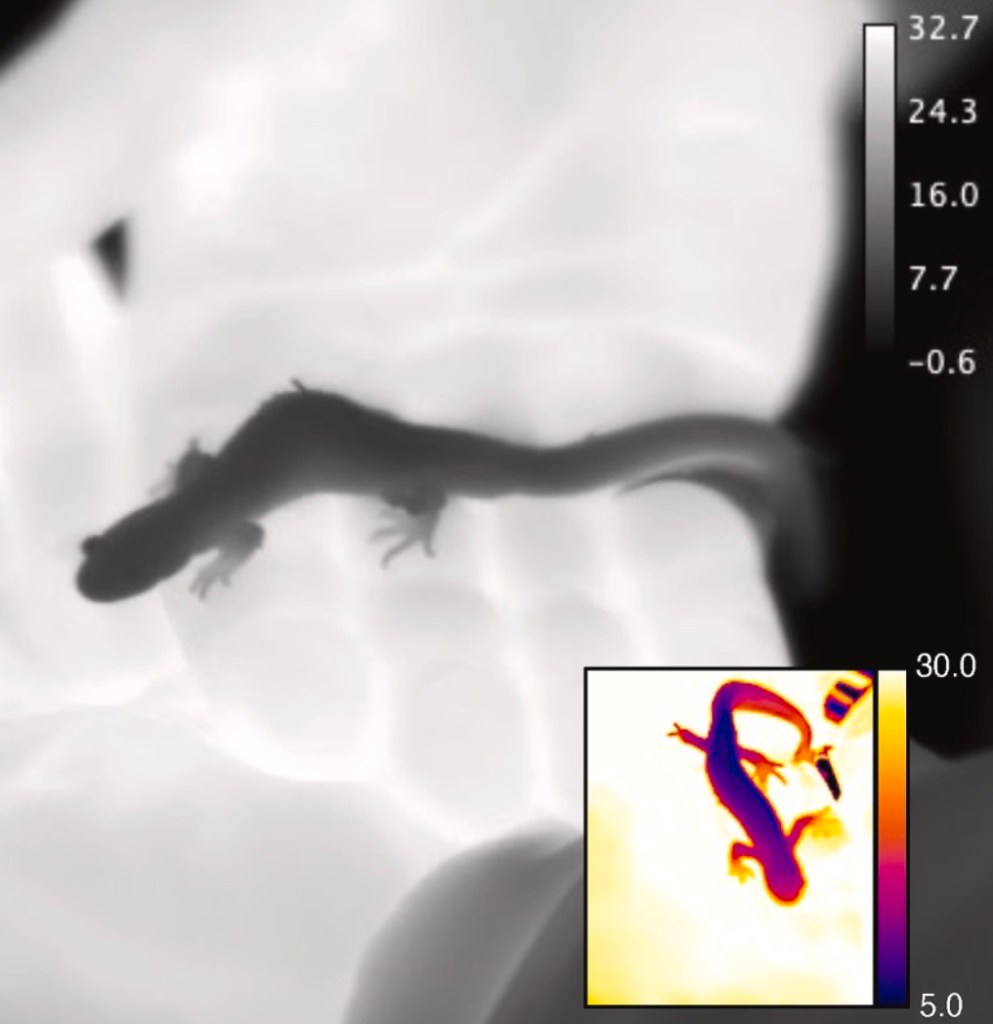
But in spring 2022 in Algonquin Park, during a brief window of opportunity we observed salamanders actively migrating, even while walking across or sheltering beside ice. Using high-resolution thermal imaging, we measured their skin temperatures (a reliable proxy for body temperature in such small animals) and found several individuals with body temperatures as low as –3.6°C, which is well below their known freezing point. Our findings suggest that blue-spotted salamanders may rely on supercooling, where their body fluids remain liquid even below freezing. This strategy has been shown in lab studies to be possible down to about –1.5°C, but our field data suggest some individuals may supercool even further, albeit briefly.
One of the most surprising observations was that several salamanders were in direct contact with ice, a known trigger for freezing of fluids that are supercooled. Despite this, they were active and moving, raising fascinating questions about how they might avoid nucleation (the start of ice formation) in natural settings or if they can manage short-term freeze/thaw during their migration.
Thermal images of blue spotted salamanders migrating at sub-zero temperatures. Temperatures reflect variation in microhabitats encountered by animals during movement, and these observed skin temperatures fall below the known freezing points and minimum supercooling points for Ambystoma laterale.
Why would salamanders take such a risk by migrating so early? There may be several evolutionary advantages. By arriving at breeding ponds early before other species, they reduce competition and potentially avoid predators. Early breeding also gives their offspring more time to grow before winter returns.
Our study opens new questions about the limits of amphibian cold tolerance and the role of behavior and microhabitat selection. More research is needed to understand whether these salamanders truly remain supercooled for long periods or whether they occasionally freeze and recover, a possibility hinted at but not yet proven in this species.
For now, our thermal images offer a rare glimpse into the early spring lives of blue-spotted salamanders and reveal that there’s still much to learn about how animals survive the cold.
Giacometti, D, Moldowan, P, and Tattersall, GJ. 2025. Sub-zero body temperatures during early spring migration in blue-spotted salamanders (Ambystoma laterale). Canadian Journal of Zoology, https://doi.org/10.1139/cjz-2025-0045
Postscript: An Editor’s Lament
The journey that this very brief natural history note took to reach publication was unnecessarily arduous. We originally submitted this study to Canadian Field Naturalist in August 2022. In that initial submission, we heard back after 16 months from the editor that the manuscript had been peer reviewed (3 reviewers) and with straightforward revisions; we supplied revisions within 30 days in January 2024. Then all went quiet with the journal for months. We reached out on numerous occasions to the editors in 2024 about whether the manuscript was still being handled, whether we would hear a decision, and received responses that indicated that editing it was not a high priority.
So, after 2.5 years sitting with Canadian Field Naturalist, we withdrew the manuscript (Spring 2025) and submitted it to CJZ where I am pleased to note that the manuscript underwent a normal peer review process.
As an editor (the average turnaround time for 1st submit Major/Minor decision papers I handle is 51 days – this includes the time to find reviewers), I was saddened at how CFN handled the initial manuscript. There were extenuating circumstances in that the associate editor handling the initial submission passed away, but we were assured by the editorial team that the manuscript would not get ‘lost’ in the re-shuffle.
As a society journal, it deserves support, but 2.5 years to handle a short manuscript does not set a good example for early career researchers; this is almost a lifetime for a graduate student.
I understand that editors need to make difficult decisions and in the course of those duties often reject studies (for fit or for other reasons). But timely decision making is just as important or more so for early career researchers. All the academic editors I know are full-time employed with academic and research jobs, but I have never heard any of them indicate or hint to an author that their submission is not a priority. If the work is not appropriate for the journal, the most humane decision is to reject it in a timely manner.
Anyhow, I am pleased with the Canadian Journal of Zoology’s handling of the manuscript. It was professional and straightforward and now we can move on from this experience.
I do think that we need to support natural history style studies/observations, so I can only hope that by sharing this, those that read this may push for change at journals that could use the support.
We’re excited to share the publication of a new paper in Ecography, led by PhD candidate Sara Ryding (Deakin University, collaboration with Matt Symonds Lab), which explores how climate change may be reshaping the morphology of migratory shorebirds. Using an incredibly extensive dataset of nearly 19,000 juvenile birds across 11 species sampled over 43 years, Sara investigated whether warming temperatures are causing changes in relative wing length, a trait thought to play a role in thermoregulation. Interestingly, while juvenile shorebirds migrating to tropical northern Australia exhibited a consistent increase in relative wing length over time, no such trend was observed in their temperate southern counterparts.
Crucially, the study found no evidence that these morphological changes are driven by developmental temperatures at the breeding grounds, suggesting that these changes are unlikely to be short-term plastic responses. Instead, they may reflect long-term, potentially evolutionary responses to the environmental conditions experienced at non-breeding sites. This work highlights how subtle, climate-linked changes in body shape (e.g. “shape-shifting”) may be occurring unevenly across populations, depending on local climatic pressures.
Congratulations to Sara on this significant contribution to our understanding of how wildlife is adapting to our changing planet.
Citation
Ryding, S, McQueen, A, Symonds, MRE, Tattersall, GJ, Victorian Wader Study Group, Australasian Wader Studies Group, Rogers, DI, Atkinson, R, Jessop, R, Hassell, CJ, Christie, M, Ross, TA, and Klassen, M. 2025. Shape-shifting in relative wing length of juvenile shorebirds: no evidence of developmental temperatures driving morphological changes. Ecography, 2025: e07801. doi: 10.1002/ecog.07801






 Tattersall Lab (TEMP)