Shape-Shifting Shorebirds: How Wing Length Is Responding to a Warming World

We’re excited to share the publication of a new paper in Ecography, led by PhD candidate Sara Ryding (Deakin University, collaboration with Matt Symonds Lab), which explores how climate change may be reshaping the morphology of migratory shorebirds. Using an incredibly extensive dataset of nearly 19,000 juvenile birds across 11 species sampled over 43 years, Sara investigated whether warming temperatures are causing changes in relative wing length, a trait thought to play a role in thermoregulation. Interestingly, while juvenile shorebirds migrating to tropical northern Australia exhibited a consistent increase in relative wing length over time, no such trend was observed in their temperate southern counterparts.

Crucially, the study found no evidence that these morphological changes are driven by developmental temperatures at the breeding grounds, suggesting that these changes are unlikely to be short-term plastic responses. Instead, they may reflect long-term, potentially evolutionary responses to the environmental conditions experienced at non-breeding sites. This work highlights how subtle, climate-linked changes in body shape (e.g. “shape-shifting”) may be occurring unevenly across populations, depending on local climatic pressures.

Congratulations to Sara on this significant contribution to our understanding of how wildlife is adapting to our changing planet.

Citation

Ryding, S, McQueen, A, Symonds, MRE, Tattersall, GJ, Victorian Wader Study Group, Australasian Wader Studies Group, Rogers, DI, Atkinson, R, Jessop, R, Hassell, CJ, Christie, M, Ross, TA, and Klassen, M. 2025. Shape-shifting in relative wing length of juvenile shorebirds: no evidence of developmental temperatures driving morphological changes. Ecography, 2025: e07801. doi: 10.1002/ecog.07801
Relationship between “naturalistic enclosures” and lizard welfare not so simple

Bearded dragons (Pogona vitticeps) have become one of the most popular pet reptiles and in many cases are contributing to research as well. But as their popularity has soared, so too has the need to better understand what these lizards actually need to live well in captivity. Our latest study, recently published in PLOS ONE, examines whether giving bearded dragons more “naturalistic” resources within their enclosures actually improves their well-being. These enclosures included features like climbing structures, loose substrate, and multiple hiding spots, compared to standard setups with only basic furnishings. We expected these more complex spaces to help the lizards behave more naturally and experience less stress. While the naturalistic enclosures did offer better thermal variety (important for ectothermic animals like reptiles), we were surprised to find that they did not have a clear effect on how active the lizards were, how they used their space, or how often they showed signs of stress or relaxation. 

Interestingly, only female lizards housed long-term in naturalistic enclosures showed lower levels of physiological stress (measured through ratios of white blood cells), suggesting that any benefits might be subtle or sex-specific. 

Overall, our findings show that simply adding complexity to an enclosure isn’t enough to guarantee better welfare. It may be that lizards don’t perceive naturalistic and standard enclosures as very different, or that enclosure size matters more than what’s in it. For reptile owners and researchers alike, the take-home message is this: meaningful welfare improvements require us to think beyond aesthetics or what human caretakers assume is “good” or “natural”—we need to constantly evaluate our efforts and ask the animals themselves what they think. 

The study is open access and available at the following link: https://doi.org/10.1371/journal.pone.0322682

Citation

Denommé, M and Tattersall, GJ. 2025. Influence of enclosure design on the behaviour and welfare of Pogona vitticeps. PLoS One 20(6): e0322682 https://doi.org/10.1371/journal.pone.0322682

A bearded dragon on top of cork bark. Photo credit Dr. Danilo Giacometti.

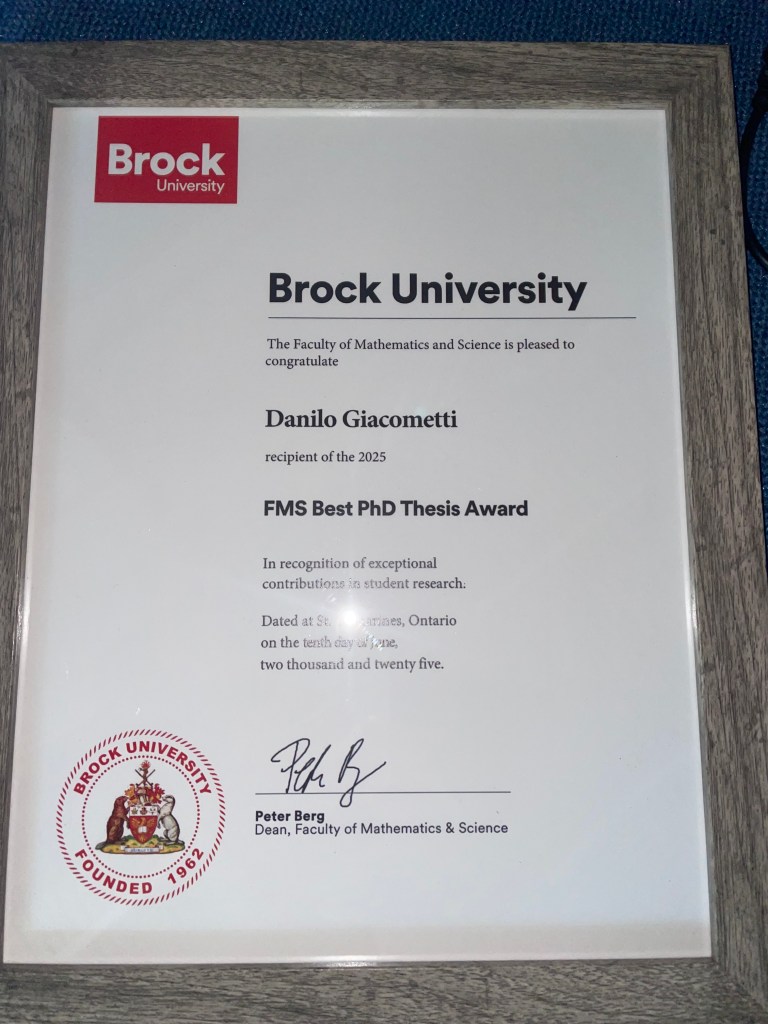
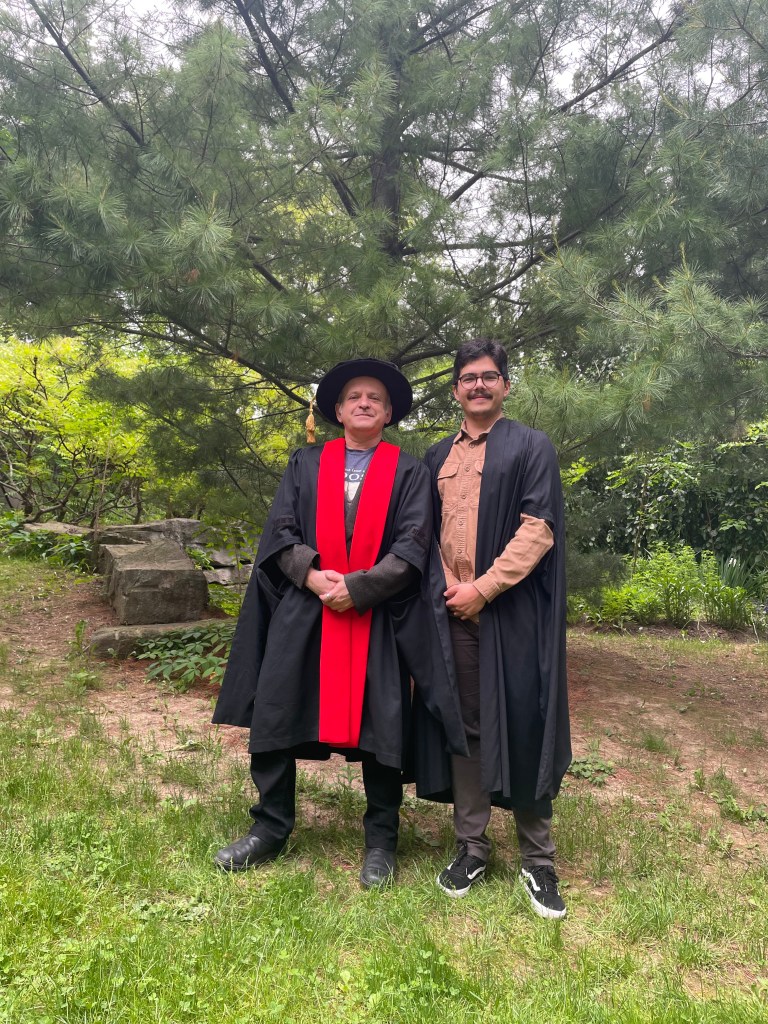
Congratulations, Dr. Giacometti!

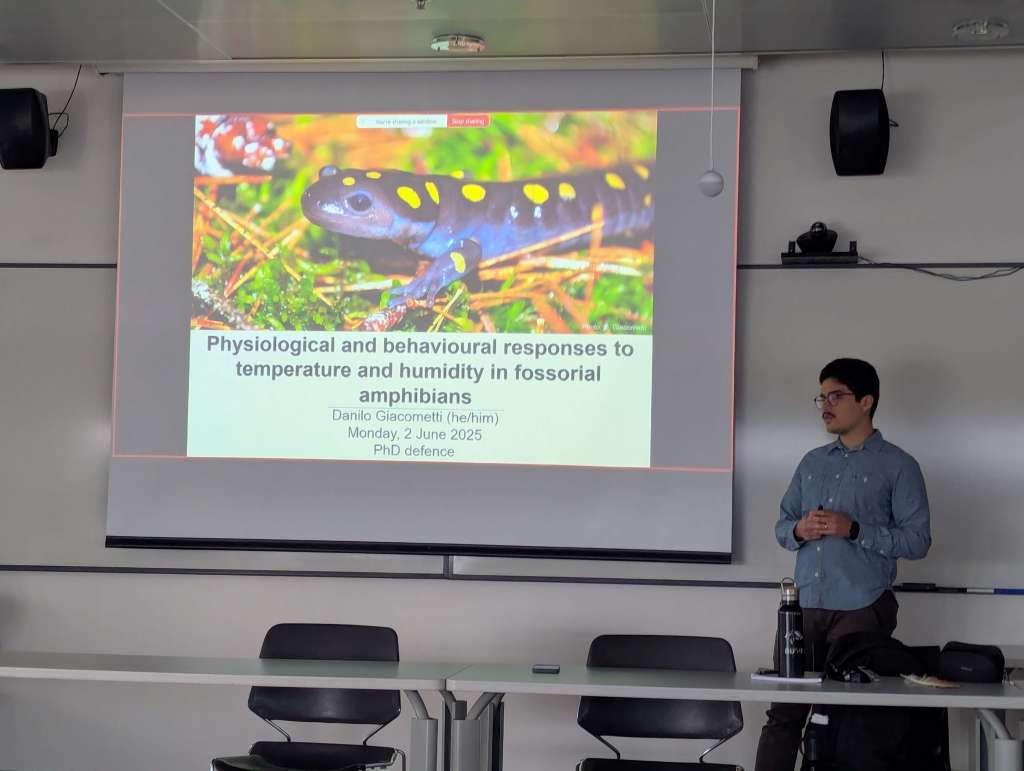
I am really proud to congratulate Dr. Danilo Giacometti for his successful PhD Defence! The thesis entitled “Physiological and behavioural responses to temperature and humidity in fossorial amphibians” was defended today in front of his examining committee: Dr. Don Miles (External, Ohio University), Dr. Toby Mündel (External within Brock University), Dr. Diane Mack (Chair, Brock University), Dr. Miriam Richards, Dr. Kiyoko Gotanda, and myself. A very large audience was in attendance for the entire defence (!). I wanted to thank our Brasilian colleagues who were able to log in and attend as well!